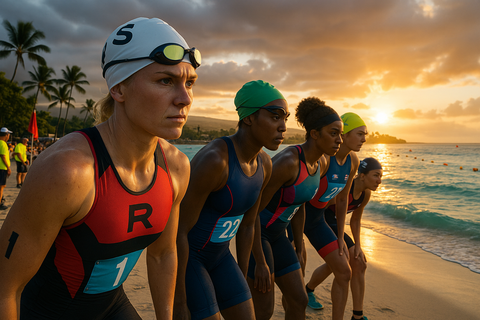
Wildlife, Warriors, and World-Class Competition: Why Challenge Sir Bani Yas is 2026's Must-Watch Triathlon
Imagine nearly 90 professional triathletes racing at full throttle while giraffes watch from the sidelines and cheetahs prowl in the distance. Welcome to Challenge Sir Bani Yas, where the Middle East desert transforms into triathlon's most surreal and spectacular theater. This coming weekend, the triathlon world will witness its first true blockbuster of 2026, and the anticipation is nothing short of electric.
Set against the backdrop of Sir Bani Yas Island in Abu Dhabi, this isn't just another middle-distance race. It's a survival test disguised as a triathlon, where athletes battle not only each other but also relentless desert heat, punishing winds, and a course that has already proven capable of breaking the strongest competitors. Last year's edition turned into what defending champion Jonathan Guisolan called "a true survival test," with several professionals forced to abandon early.
What makes this weekend even more compelling is the sheer quality of the professional fields. With a start list that reads like a who's who of triathlon excellence, we're about to witness racing fireworks in one of the sport's most unique settings. From Jolien Vermeylen's highly anticipated middle-distance debut to a men's field packed with 60 world-class professionals, this preview will break down everything you need to know about the athletes, the course, and what makes this event truly unforgettable.
The Star-Studded Professional Fields: Depth Meets Quality
Women's Elite Field: Vermeylen's Bold Middle-Distance Gambit
The women's race centers around one of the most intriguing storylines of the early season: Jolien Vermeylen's transition to middle distance. The Belgian Olympian, fresh off arguably the best season of her career in 2025, has chosen the brutal conditions of Sir Bani Yas for her debut at the longer distance. It's a bold move that speaks volumes about both her confidence and her racing philosophy.
"Vermeylen is expected to race aggressively at the front," notes the race preview, but her transition success is far from guaranteed. The step up from short course to middle distance is notoriously challenging, and doing it in the unforgiving Middle East heat adds another layer of complexity.
Standing in her way is a formidable collection of proven middle-distance specialists, including:
- Ellie Salthouse: The Australian powerhouse whose engine seems built for exactly these conditions
- Natalie van Coevorden: A consistent performer who thrives in challenging environments
- Justine Mathieux: Known for her tactical racing and ability to perform under pressure
- Fenella Langridge: A veteran competitor with extensive experience in hot-weather racing
- Magda Nieuwoudt: The South African whose background gives her an edge in extreme conditions
With around 30 professionals on the start line, the depth extends well beyond the headline names. The beauty of Sir Bani Yas lies in its ability to shuffle the deck – athletes who typically find themselves in supporting roles often emerge as surprise contenders when the conditions get tough.
Men's Elite Field: A 60-Deep Battle Royale
If the women's field promises excitement, the men's race might deliver pure chaos. Nearly 60 professionals will toe the line, creating a field so deep that predicting the podium becomes an exercise in educated guesswork rather than clear favorites.
At the top of the food chain sits defending champion Jonathan Guisolan, who brings both course knowledge and improved form to his title defense. "After mainly impressing on the bike last year, he has taken another step forward in recent months – and knows the course inside out," the race report notes. That intimate course knowledge could prove decisive when the survival instincts kick in during the final kilometers.
The international challenge comes from an extraordinary lineup:
- Jonas Schomburg: The German powerhouse who excels in demanding conditions
- Caleb Noble: Known for his aggressive racing style and strong finishing kick
- Pieter Heemeryck: The Belgian veteran whose experience in challenging races is invaluable
- Thomas Davis: A consistent performer who thrives when races get tactical
- William Mennesson: The Frenchman whose endurance background suits the course profile
- Henri Schoeman: Olympic experience that translates well to high-pressure situations
- Andreas Dreitz: German precision meets middle-distance excellence
- Max Stapley: Rising star looking to make his mark on the international stage
The list continues with Pierre Le Corre, Kieran Lindars, Thomas Bishop, and Thomas Davies, creating a field where any number of athletes could realistically contend for victory depending on how the race unfolds.
The Brutal Course That Separates Pretenders from Champions
Swimming Among Marine Life in Desert Heat
The race begins with what might be triathlon's most unique swim experience. Athletes dive into "pretty hot open water" where the temperature alone presents the first challenge of the day. But the real magic lies in the potential wildlife encounters – competitors may spot dolphins and turtles during their swim, creating moments that blur the line between athletic competition and nature documentary.
The warm water conditions affect race strategy significantly. While some athletes thrive in warmer temperatures, others find their normal pacing completely disrupted. For those looking to improve their open water swimming technique, proper swim preparation and care becomes crucial in these challenging conditions. The psychological element of swimming in unfamiliar conditions, combined with the physical demands of racing in heat from the very first stroke, sets the tone for everything that follows.
The Bike: Where the Desert Shows Its Teeth
The bicycle leg is where Sir Bani Yas reveals its true character. Rolling, exposed roads featuring a steep climb and relentless hot winds create a perfect storm of physical and mental challenges. This isn't just about fitness – it's about heat management, tactical positioning, and the mental fortitude to push through when every instinct screams to ease off.
The course profile favors athletes who excel in varied terrain. The steep climb demands power and climbing ability, while the exposed sections require aerodynamic efficiency and the mental strength to maintain pace when the hot winds feel like a constant adversary. The rolling nature means there's nowhere to hide – every athlete must be prepared to suffer from start to finish.
What makes this particularly challenging is the cumulative effect of the conditions. As race reporter Tim Moria noted from last year's experience, the course becomes "as honest as it is brutal." Athletes can't fake their way through any section – the desert environment exposes weaknesses ruthlessly.
The Run: Where Champions Are Made and Broken
The run segment is where Sir Bani Yas earns its reputation as a true test of triathlon toughness. Contested under high temperatures, the run has proven decisive in the past, with last year's edition becoming what organizers described as "a true survival test."
The psychological battle during the run is as intense as the physical one. Athletes must balance aggressive racing with heat management, knowing that pushing too hard early could lead to complete breakdown in the final kilometers. Understanding proper pacing strategies becomes essential when the desert heat threatens to derail even the best-laid race plans. The course has already demonstrated its ability to force professional athletes into early retirement, creating an atmosphere where simply finishing becomes an achievement in itself.
Historical data suggests that the run is where the real race begins. Athletes who may have been competitive through the swim and bike often find themselves in pure survival mode once the running begins. This creates opportunities for heat-adapted athletes to make dramatic moves while others struggle just to maintain forward progress.
What Makes Sir Bani Yas Truly Unique: Beyond Traditional Racing
Racing in a Wildlife Sanctuary
The most immediately striking aspect of Challenge Sir Bani Yas is the setting itself. Athletes race across the island surrounded by giraffes, antelopes, cheetahs, and other wildlife, creating what can only be described as surreal racing conditions. This isn't just a marketing gimmick – it's a genuine part of the race experience that adds an element of wonder to the suffering.
The wildlife presence creates unique photo opportunities and spectacle that sets Sir Bani Yas apart from every other race on the calendar. For athletes and spectators alike, the sight of elite competitors racing past grazing giraffes provides moments that transcend sport and enter the realm of pure spectacle.
Safety protocols ensure that both athletes and wildlife are protected, but the knowledge that you're sharing the course with some of nature's most magnificent creatures adds a layer of respect and awareness that's unique in professional triathlon.
Luxury Cruise Ship Innovation
Perhaps the most innovative aspect of the event is the luxury cruise ship accommodation that docks directly next to the start and finish area. This solution addresses one of triathlon's biggest logistical challenges – providing quality accommodation in remote or challenging locations.
For athletes, the cruise ship represents more than just convenience. It creates a controlled environment for pre-race preparation, eliminates travel stress on race morning, and provides a unique recovery environment post-race. The psychological benefits of having everything contained in one floating headquarters cannot be overstated.
For spectators and supporters, the cruise ship transforms the entire weekend into an experience rather than just a race. The proximity to the action, combined with luxury amenities, elevates the spectator experience in ways that traditional race venues simply cannot match.
Race Predictions and Key Storylines
Women's Race: The Vermeylen Experiment
All eyes will be on Jolien Vermeylen's middle-distance debut, and how she manages the transition could set the tone for her entire 2026 season. Her background suggests she has the speed to go with the early pace, but the question becomes whether she can maintain that intensity over the longer distance in challenging conditions.
The course conditions may actually favor her approach. Athletes who traditionally rely on superior endurance might find themselves compromised by the heat, creating opportunities for someone with Vermeylen's speed and tactical awareness to strike when others are merely surviving.
Ellie Salthouse emerges as a logical favorite given her combination of proven middle-distance success and experience racing in challenging conditions. Her ability to suffer through difficult weather could prove decisive when the race reaches its critical moments.
Dark horse candidates include athletes like Magda Nieuwoudt, whose South African background provides natural heat adaptation, and Fenella Langridge, whose experience in varied race conditions could prove invaluable when tactics become more important than pure fitness.
Men's Race: Depth Creates Chaos
With 60 professionals in the mix, the men's race becomes an exercise in survival of the fittest rather than a traditional tactical affair. Jonathan Guisolan's course knowledge gives him a significant advantage, particularly in understanding pacing strategies for the run segment where so many athletes struggled last year.
The international challengers bring varying strengths to the table. Jonas Schomburg's proven ability in demanding conditions makes him a natural threat, while athletes like Caleb Noble and Pieter Heemeryck bring the tactical awareness that often proves decisive when large fields thin out under pressure.
The beauty of such a deep field lies in the potential for surprise performances. Athletes who might typically find themselves racing for top-15 positions could suddenly discover themselves in contention for podium spots when the conditions eliminate traditional favorites.
Weather as the Ultimate Wild Card
Historical weather patterns suggest that conditions will play a decisive role in determining race outcomes. The combination of high temperatures, potential wind, and the cumulative effect of racing in desert conditions creates variables that even the most experienced athletes struggle to predict.
Athletes with extensive hot-weather racing experience hold natural advantages, but even they must adapt their strategies to the specific demands of Sir Bani Yas. The course has already demonstrated its ability to humble proven performers, making pre-race predictions challenging at best.
Your Complete Viewing Guide
Following the Action
Challenge Sir Bani Yas represents the perfect season opener for triathlon fans eager to see how the sport's biggest names handle unique challenges. The combination of star-studded fields, brutal conditions, and genuinely unique setting creates must-watch television.
The race's position as the first major event of 2026 adds significance beyond the immediate competition. How athletes perform in these conditions often provides insights into their preparation and mindset for the season ahead. For fans, it's an opportunity to see how fitness built during the off-season translates under race pressure.
Key moments to watch for:
- Swim exits and early positioning in the heat
- Bike leg positioning before and after the major climb
- Critical moments in the early miles of the run when heat stress typically peaks
- Final kilometers where course knowledge and heat adaptation create decisive advantages
The Bigger Picture
This race represents more than just another weekend of triathlon – it showcases the sport's evolution toward destination events that combine athletic challenge with unique experiences. The success of innovations like cruise ship accommodation could influence how other challenging venues approach athlete and spectator services.
For the athletes, Sir Bani Yas serves as an early-season reality check. Success here often indicates proper preparation and adaptability, while struggles can highlight areas needing attention before the season's major objectives. Those looking to improve their own training approaches can learn valuable lessons from watching how the pros handle extreme conditions.
Why This Race Matters for Triathlon's Future
Challenge Sir Bani Yas represents everything that makes modern triathlon compelling: world-class athletics combined with genuine adventure and unique experiences that transcend traditional sport boundaries. The combination of elite competition, innovative logistics, and a setting that literally cannot be replicated anywhere else creates something special.
The quality of the professional fields demonstrates the race's growing prestige within the Challenge Family series and the broader triathlon community. When 90 professionals choose to travel to the Middle East for the season opener, it signals that this event has achieved something rare – a reputation for being both incredibly challenging and genuinely rewarding.
As the 2026 season kicks off, Challenge Sir Bani Yas sets a high bar for what constitutes a memorable race experience. Whether you're following from afar or planning to attend future editions, this weekend promises to deliver the kind of racing that reminds us why we fell in love with triathlon in the first place.
The combination of world-class athletes, brutal conditions, innovative solutions, and genuine spectacle creates racing that transcends mere competition and enters the realm of genuine adventure. In a sport increasingly dominated by predictable venues and conventional approaches, Sir Bani Yas stands as a reminder that the best races happen when we push boundaries and embrace the unknown.
This weekend, as the world's best triathletes dive into hot desert waters while giraffes graze nearby, we'll witness something that simply cannot happen anywhere else on earth. That's the magic of Challenge Sir Bani Yas – and that's why it deserves your attention.
Find the perfect triathlon gear at TriLaunchpad — your triathlon journey starts here. Shop all collections →