
Canyon Speedmax CFR Review: The Bike That Broke the Long-Distance World Record at Challenge Roth
Before it hit the market, this Canyon superbike had already rewritten the record books. Here's everything you need to know about triathlon's most anticipated bike launch of 2026.
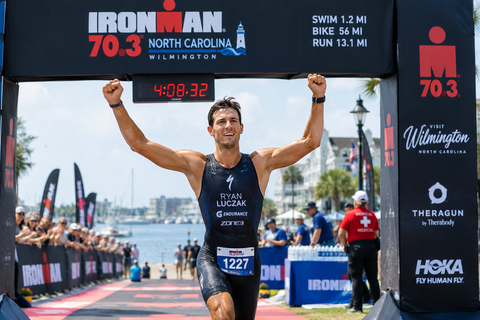
Imagine crossing a finish line with your arms spread wide, exhaustion and euphoria etched across your face, knowing you've just broken a world record — on a bike that hasn't even gone on sale yet. That's exactly what Sam Laidlow did at Challenge Roth 2026, clocking an astonishing 7:21:04 to defend his title and rewrite the long-distance triathlon record books. Beneath him for every one of those 180 kilometers sat the unreleased Canyon Speedmax CFR, a machine that wouldn't be available to the public until three days later.
It's the kind of product debut that no marketing budget can buy. And for triathletes wondering whether the next generation of aero technology can actually move the needle, Laidlow's performance is as compelling a proof of concept as the sport has ever seen.
In this deep dive, we break down exactly what makes the new Speedmax CFR different, what those claimed watt savings actually mean over a long bike leg, and — critically — whether any of this matters to you as an age-group athlete.
The Record-Breaking Debut: What Actually Happened at Challenge Roth
A World Record Before the Bike Even Launched
Challenge Roth has long held a reputation as the fastest long-distance triathlon course on the planet. Its flat-to-rolling Bavarian roads, legendary crowd support on the Solarer Berg climb, and meticulously organized logistics draw the world's best — and they consistently produce fast times. On July 6, 2026, Laidlow didn't just win the race. He shattered the long-distance world record by seconds, completing the full 226.2km course in 7:21:04.
What makes the story even more remarkable? The Canyon Speedmax CFR he was riding wasn't scheduled to launch until July 9. Canyon sent their athlete to the world's most prestigious long-distance race on unreleased equipment, betting everything on real-world performance rather than a polished press release. It paid off spectacularly.
Laidlow himself summed it up with characteristic honesty: "I knew the set-up felt faster and was optimized perfectly for me, but until this point, I didn't know how much of a difference that would make over 180km."
The Fastest Bike Split of the Day — and a Remarkable Debut
It wasn't just Laidlow turning heads on the Canyon. Fellow Canyon athlete Rico Bogen — a middle-distance specialist making his very first full-distance start — posted a bike split of 3:54:45, the fastest of the entire day. Let that sink in: a rider making his long-distance debut, on an unreleased bike, posted the quickest 180km of any athlete in the race.
By the time Laidlow and Bogen rolled into Transition 2, they had opened a 12-minute gap over Kristian Blummenfelt — the Olympic champion and one of the sport's most decorated athletes making his Challenge Roth debut. That cushion proved decisive. While Blummenfelt's renowned marathon running ability allowed him to pass Bogen during the 42km run (Bogen still finished third overall in an outstanding debut), Laidlow had enough runway to complete his record-breaking performance.
"I took eight minutes off the bike split versus last year and, with the bike's watt savings, I still had plenty of gas in the tank for the overall record," Laidlow said.
Eight minutes faster on the bike than his own 2025 performance. On a course he already knew intimately. That number deserves to be underlined.
Multiple Athletes, Consistent Results
One standout performance can be written off as conditions, form, or luck. Three cannot. Kat Matthews and Caroline Pohle also debuted the new Speedmax CFR in the women's race, finishing 4th (8:31:35) and 5th (8:32:49) respectively against a leading international women's field — one ultimately won by Alanis Siffert in stunning fashion.
Key Takeaway: Real-world validation across three very different athlete profiles — elite male defending champion, middle-distance specialist making a full-distance debut, and two competitive women — suggests this isn't a one-athlete, one-day story.
Engineering the Advantage: What's Actually New on the Canyon Speedmax CFR?
The Cockpit Fuelling Module: 7 Watts You Didn't Know You Were Losing
The headline aerodynamic update on the new Speedmax CFR is a completely redesigned cockpit fuelling module. Canyon claims this integration saves 7 watts compared with Laidlow's previous customized Speedmax CFR setup.
Seven watts sounds modest until you do the math. At a racing speed of 40–45km/h — typical for elite long-distance riders — 7 watts translates to roughly 20–30 seconds per hour. Over a 4.5-hour bike leg, that compounds to 90 seconds to 2+ minutes of saved effort, purely from how your nutrition is stored. For age-group athletes riding at slightly lower speeds, the aerodynamic benefit is proportionally similar; the practical improvement in fuelling access without disrupting your position is arguably even more valuable.
The insight here is subtle but important: it's not just about the frame. The biggest aero gains on modern tri bikes increasingly come from the rider's position and everything attached to it — helmets, hydration, nutrition. Canyon has clearly focused their redesign energy in the right place.
Shielded Extension Bars: 3 More Watts at Race Speed
Complementing the cockpit module are shielded extension bars, which Canyon claims deliver a 3-watt saving at 45km/h. The design principle is straightforward: shields protect both the rider's hands and any stored fuel from direct airflow, reducing turbulence in one of the most aerodynamically complex zones of a triathlon bike.
Combined with the cockpit saving, you're looking at 10 watts of claimed improvement from two components alone — before even considering the frame itself.
A Lighter Frameset: 250 Grams Off the Previous CFR
The new Speedmax CFR frameset is 250 grams lighter than its predecessor. On a pure flat course, weight matters less than aerodynamics; air resistance is the dominant force at triathlon speeds. But Challenge Roth isn't entirely flat. The Solarer Berg climb — famous for its wall of screaming spectators — is precisely where a lighter frame earns its keep. Multiple riders highlighted this section as a differentiator, and Bogen's fastest-split performance through varied terrain reinforces the point.
Holistic Aerodynamic Redesign: Beyond the Frame
Canyon's design philosophy with the new CFR goes beyond individual components. According to the brand, the bike has been redesigned with aerodynamics considered across four interconnected areas: cockpit, frame, rider fit, and fuelling. This whole-system approach reflects how elite athletes and their coaches actually think about speed — every element either contributes to or detracts from the overall aerodynamic package.
Crucially, Canyon says the bike has been developed to make professional-level fit and cockpit adjustments more accessible to everyday riders, with the aim of helping athletes achieve a faster, more efficient riding position straight out of the box.
The Science of Watt Savings: What Does 10 Watts Actually Buy You?
Putting 10 Watts in Context
In professional cycling, teams invest enormous resources to find 3–5 watt improvements. A 10-watt aerodynamic advantage — claimed from just two components of the new CFR — is genuinely significant. At race pace, here's a rough breakdown of what that means over a long bike leg:
| Watt Saving | Source | Approx. Time Saving (per hour at 40km/h) |
|---|---|---|
| 7W | New cockpit fuelling module | ~20–30 seconds |
| 3W | Shielded extension bars | ~9–13 seconds |
| 10W total | Combined | ~30–45 seconds/hour |
Over a 4.5-hour bike leg, that's roughly 2–3 minutes of time savings from aerodynamics alone. Add a 250-gram weight reduction for climbs and improved rider positioning, and the cumulative effect starts to explain how Laidlow found 8 minutes against his own 2025 benchmark.
Why Did Laidlow Save 8 Minutes If Only 10 Watts Are Claimed?
This is the honest question worth asking. The math of 10 watts doesn't quite add up to 8 minutes — so what else contributed? Several factors compound the raw aerodynamic gains:
- Better pacing strategy: Laidlow knew his bike. Confidence in equipment allows athletes to push harder and smarter.
- Improved rider position: A better-fitting cockpit means more efficient power transfer, not just reduced drag.
- Weight savings on climbs: The Solarer Berg is where 250 grams matters.
- Fresher legs at T2: If the bike's watt savings and fuelling integration meant Laidlow used less energy per kilometer, he arrived at the run in better shape — which compounds into overall time savings.
"I still had plenty of gas in the tank for the overall record," Laidlow noted — a telling detail. The bike didn't just save time on the bike leg; it set up the record run.
The honest takeaway for age-group athletes: Expect measurable but not magical gains. If you're already fit and your current bike is more than five years old, a modern aero design like the new CFR will likely save you 2–4 minutes over a long bike leg. That's real. It's not going to turn a 5-hour bike leg into a 4-hour one.
Accessibility vs. Elite Performance: Who Is This Bike Really For?
"Professional-Level Fit for Everyday Riders" — What That Really Means
Canyon's stated goal is admirable: democratize the technology that wins world records. In practice, what does that mean for a 35-year-old age-group athlete preparing for their first long-distance race?
The new CFR's cockpit adjustments are designed to be more intuitive, allowing riders to dial in their aero position without needing a specialist fitting studio. The integrated fuelling module means you don't need to rig up custom bottle solutions to stay aerodynamic while eating on the bike. These are genuinely useful improvements for athletes who don't have Canyon's engineers and a personal fitting team at their disposal.
That said, a note of honesty is warranted: Laidlow's bike was still customized to his individual setup. The baseline is better, but elite performance still benefits from professional fitting. For age-group athletes, the new CFR is a stronger starting point than its predecessor — but getting a proper bike fit remains one of the highest-return investments you can make in long-distance triathlon, regardless of which bike you ride.
Women's Performance Data: A Positive Signal
The fact that Canyon debuted the new CFR with both male and female athletes at Challenge Roth is noteworthy. Matthews' and Pohle's 4th and 5th place finishes against a strong international field demonstrate that the bike's aerodynamic advantages apply across athlete profiles and physiology. The 10-watt saving doesn't discriminate.
Is It Worth the Investment?
This is where we have to be direct. The new Canyon Speedmax CFR is a premium product targeting serious triathletes. Before pulling the trigger, ask yourself:
- Is your current bike the limiting factor? If you're riding a 5–7+ year-old entry-level triathlon bike or a road bike with clip-on bars, a modern aero setup will offer significant gains. If you're already on a current-generation tri bike, the improvement will be real but incremental.
- Have you maximized your training first? Fitness gains from structured training — especially improving your cycling threshold power — will outpace equipment gains at most age-group levels.
- Can you get a proper fit? The bike's accessible design helps, but a professional fitting session will unlock far more of the CFR's potential than riding it off-the-shelf.
For competitive age-group athletes already on a solid training base and older equipment, the new Speedmax CFR is a compelling upgrade. For beginners, the smartest investment remains coaching and consistent training before premium equipment.
Equipment vs. Execution: The Bigger Picture
Why Laidlow's Record Matters Beyond the Bike
It would be easy to read this as a story about technology winning a world record. It isn't. Sam Laidlow is the defending Challenge Roth champion, an elite athlete in peak physical condition, racing on a course he knows intimately. The bike gave him an edge; his fitness, race intelligence, and execution delivered the record.
This matters for how you interpret Canyon's claims. Equipment is an enabler, not a determinant. The new Speedmax CFR gave Laidlow a faster, more efficient platform to express his extraordinary fitness. In your hands, it will give you a measurably faster bike leg — but only if the fitness and technique are there to back it up.
Frequently Asked Questions
What is the Canyon Speedmax CFR bike, and why is it significant?
The Canyon Speedmax CFR is a high-performance triathlon bike that recently gained attention when Sam Laidlow rode it to victory at Challenge Roth, breaking the long-distance world record. Its significance lies in its innovative design focused on aerodynamics, weight reduction, and rider comfort.
What features have been improved in the new Speedmax CFR?
The new Speedmax CFR boasts a redesigned cockpit fuelling module that saves seven watts compared to the previous model. Additionally, the bike is 250 grams lighter and includes shielded extension bars that save three watts at 45 km/h, improving aerodynamic efficiency.
When will the new Canyon Speedmax CFR be available for purchase?
The Canyon Speedmax CFR is set to launch on July 9th and will be available through Canyon's official website.
Who is Sam Laidlow, and what achievement did he accomplish at Challenge Roth?
Sam Laidlow is a triathlete who won the Challenge Roth event in 2026, breaking the long-distance world record with a time of 7:21:04. His victory was notable as he defended his title while delivering an outstanding performance on the new Canyon Speedmax CFR.
What was the competitive context during Laidlow's race at Challenge Roth?
During the race, Laidlow maintained a significant lead, entering T2 with a 12-minute advantage over competitors like Kristian Blummenfelt, ensuring that he could ultimately secure his record-breaking win despite the competitive field.
Source: 220triathlon.com — Sam Laidlow's Challenge Roth Winning Bike