Beginner IRONMAN Distance Guide
Signing up for an IRONMAN can feel productive. Finishing one is something else entirely. If you are looking for a beginner ironman distance guide, the real question is not just what the distance is - it is whether your current fitness, schedule, and recovery habits match what that distance asks of you.
For beginners, that distinction matters. A lot of athletes can survive a big training block for a few weeks. Far fewer can absorb months of swim, bike, and run volume without getting injured, burned out, or frustrated. The smartest start is not hype. It is clarity.
What the beginner ironman distance guide needs to tell you first
A full IRONMAN distance is 3.8 km swim, 180 km bike, and 42.2 km run. In miles, that is 2.4 miles, 112 miles, and 26.2 miles. It is not just a long triathlon. It is an all-day energy management problem.
That matters because beginners often look at each segment in isolation. They ask if they can swim 3.8 km, or bike 180 km, or run a marathon. Those are fair questions, but IRONMAN is about doing all three in sequence, under race stress, while eating enough, pacing correctly, and staying mentally steady for hours.
A better way to think about the distance is this: the swim starts the day, the bike shapes the day, and the run exposes every pacing mistake you made earlier.
Is IRONMAN realistic for a first long-course goal?
Yes, sometimes. Not always.
If you already have a strong endurance background, a few years of consistent running or cycling, and some triathlon experience, a first IRONMAN can be realistic with the right timeline. If you are brand new to swimming, have never raced beyond sprint distance, or struggle to train consistently across a normal work week, going straight to full distance is possible but usually not the fastest route to success.
For many athletes, a 70.3 is the better stepping stone. It gives you a serious long-course experience without the same recovery cost, fueling demands, and training load. There is no shortcut prize for choosing the harder option too early.
Confidence comes from matching the race to your current capacity, not your biggest ambition on social media.
The real training demand behind the distance
The distance on paper is simple. The preparation is where things get serious.
A beginner training for IRONMAN usually needs 6 to 12 months, depending on background. Someone coming from solid half marathon fitness with good bike habits and basic swim comfort might build toward it in the shorter end of that range. Someone starting from general gym fitness will need longer, especially if swimming is a weakness.
Most beginners do well with a gradual progression rather than an aggressive rush. Early training may sit around 7 to 9 hours per week. Peak weeks often climb into the 12 to 16 hour range, sometimes more. The exact number depends on your experience, durability, pace, and how efficiently you train.
That last point is important. A slower athlete is out on the course longer, which means long rides and long runs can take more calendar time, not just more effort. For busy professionals, this is often the biggest surprise. The challenge is not only fitness. It is logistics.
What each discipline really asks from a beginner
Swim
The swim scares most beginners, and with good reason. Open water changes everything. Pool fitness helps, but race-day confidence comes from technique, sighting, calm breathing, and comfort around other athletes.
For most first-time IRONMAN athletes, the swim should be approached as an efficiency project, not a brute-force project. Better form can save more energy than simply pushing harder. If your swim is weak, that does not automatically disqualify you from the distance. But it does mean you need more lead time and more specific practice.
Bike
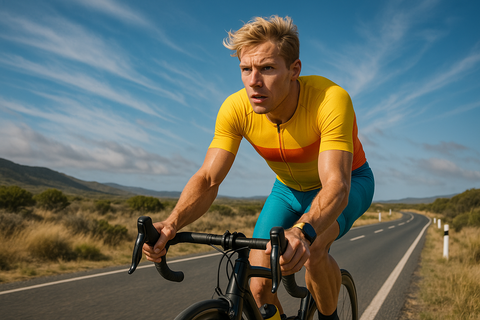
The bike is usually the most important leg for beginners. It is the longest segment, and it sets up the run. A strong bike split is not about speed alone. It is about pacing in a way that leaves your legs functional for the marathon.
This is where many beginners get trapped by enthusiasm. They feel good early, ride above target effort, and pay for it after hour five. A disciplined bike is one of the clearest signs that an athlete is ready for full distance racing.
Run
The run is where the event becomes brutally honest. You are not running a fresh marathon. You are running on accumulated fatigue, with nutrition and pacing already tested.
That is why standalone marathon times do not directly predict IRONMAN performance. A strong runner who under-fuels or overbikes can unravel quickly. A steadier athlete with better discipline often performs better than expected.
Beginner readiness markers that matter more than motivation
Motivation helps you register. Readiness helps you finish well.
A beginner is usually moving toward IRONMAN readiness when a few things are true at the same time. You can train consistently for months without constant interruption. You recover well from long sessions. You have at least some race experience in triathlon or endurance events. You can handle open-water swimming without panic. You understand basic fueling and hydration, not just as theory but in training.
It also helps if your life can support the goal. Sleep, family expectations, work stress, and weekend availability are not side issues. They are part of the plan. A full-distance build asks for repeated long days. If your schedule cannot support those days, your training quality drops fast.
The cost side beginners often underestimate
An honest beginner ironman distance guide also needs to talk about money.
The entry fee is only one piece. Add a wetsuit if required, a reliable bike, bike maintenance, nutrition, race kit, travel, accommodation, and training support. You do not need the most expensive setup to finish, but you do need equipment you trust.
This is where beginners should think in terms of risk reduction, not status. A comfortable tri suit, dependable tires, proper bike fit, and tested fueling matter far more than chasing premium upgrades too early. Spend where it improves safety, comfort, and consistency.
How to know if you should do a 70.3 first
If you are unsure, that hesitation is useful data.
A 70.3 is often the smarter move first if your swim is still developing, your long-run history is limited, or your bike endurance has not yet reached all-day levels. It also makes sense if you want to learn race execution without turning every training week into a major stress event.
There are exceptions. Some athletes have the engine, patience, and schedule to build directly to full distance. But for many beginners, 70.3 is not a compromise. It is a performance-building step that makes the eventual IRONMAN experience stronger and more enjoyable.
Common beginner mistakes before race day
The biggest mistake is choosing the race before understanding the process. The second is copying advanced athletes whose training history is completely different from yours.
Another common issue is underestimating nutrition practice. Beginners often train the workouts but not the fueling. Then race day becomes an experiment, and long-course racing is a terrible place to experiment. Consider testing electrolyte supplements during your training blocks to dial in your race-day nutrition strategy.
There is also a mindset mistake that shows up often: treating every session as proof of toughness. IRONMAN training rewards patience more than hero workouts. Consistency beats drama. A controlled week completed well is better than one huge weekend followed by four days of fatigue.
A smart way to frame your first IRONMAN goal
If this distance is calling you, good. Big goals are part of what makes triathlon special. But the strongest beginner approach is measured.
Start by asking three direct questions. Can I train consistently for the next 6 to 12 months? Can I build swim confidence, bike durability, and run resilience without ignoring recovery? Can my current life actually support this project?
If the answer is yes, then full distance can become a structured progression instead of a reckless leap. Build your decision around readiness, not pressure. Use shorter races as checkpoints if needed. Let your long sessions tell the truth.
For many athletes, the best first IRONMAN is not the soonest one available. It is the one that gives you enough time to arrive prepared, calm, and capable.
That is the standard worth chasing. Start your triathlon journey with confidence, choose the distance that fits your real starting point, and give yourself the kind of preparation that turns a hard day into a strong one.