
What Every Pre-Med Student Can Learn from This MIT Senior's Multi-Disciplinary Approach
How Alex Tang built a path to medicine through cancer research, student journalism, and competitive triathlon—and what his journey reveals about preparing for a career in medicine.
It all began with a newspaper column.
As a young student, Alex Tang found himself engrossed in Lisa Sanders' "Diagnosis" column in The New York Times Magazine. Despite the challenge of unfamiliar medical jargon, he was captivated by the process—how physicians transformed a puzzling array of symptoms into a diagnosis, a plan, and a path forward for patients who had none.
That fascination never left him.
Today, Tang is a senior at MIT, on the cusp of starting medical school. Over the past three and a half years, he has delved into metastatic colorectal cancer research at the Broad Institute, led MIT's historic student newspaper through challenging times, and secured a third-place finish in his age group at the 2025 Boston Triathlon. All this while pursuing dual majors in chemistry and biology, with a minor in biomedical engineering.
Tang's undergraduate journey is remarkable by any standard. Yet, what makes his story truly instructive for pre-med students isn't the length of his résumé—it's the logic behind it. Every pursuit Tang has chosen aligns with a clear vision of the physician-scientist he aspires to become.
That's the lesson worth studying.
Building Academic Breadth: Why Multiple Lenses Matter in Medicine
Tang's decision to double-major in chemistry and biology, with an added minor in biomedical engineering, wasn't random. It reflects a deliberate philosophy about how rigorous scientific thinking develops.
"All of the courses have encouraged me to think about problems through different lenses," he says.
This is more significant than it might seem. Medicine isn't a single discipline. A physician diagnosing a complex case draws on biochemistry, physiology, genetics, and systems thinking. A physician-scientist developing a new therapy needs to understand molecular mechanisms, clinical outcomes, and the engineering challenges of translating bench discoveries into usable treatments.
Students who train exclusively in one framework risk developing blind spots. Tang's interdisciplinary coursework builds the connective tissue between fields—the ability to move fluidly between a molecular-level question and a patient-level implication.
For pre-med students, the takeaway isn't necessarily to pile on majors. It's to be intentional about how your courses build on each other. Ask yourself: does your academic program give you multiple frameworks for understanding biological problems, or does it leave you fluent in only one language?
Research Excellence: Bridging Basic Science and Patient Care
Tang's research trajectory illustrates something that medical schools increasingly emphasize: the difference between doing research and understanding why you're doing it.
Early in his MIT career, Tang joined the Nir Hacohen Lab at the Broad Institute, a world-class genomics and biomedical research center affiliated with MIT and Harvard. His interest in oncology crystallized after taking 7.45 (Cancer Biology), taught by professors Tyler Jacks and Michael Hemann—a course that gave him the conceptual scaffolding to understand why the problems he encountered in the lab mattered.
For the past three and a half years, Tang has focused on a research question with direct clinical stakes: how do tumors in patients with metastatic colorectal cancer respond to—and resist—combined immunotherapy and targeted molecular therapy?
A quick definition: Immunotherapy works by activating or enhancing the body's own immune system to attack cancer cells. Targeted molecular therapy takes a more precise approach, using drugs designed to interfere with specific molecular targets involved in tumor growth. Combining the two represents one of the most promising frontiers in oncology—and one of its most complex challenges.
"I hope my work can provide clarity for patients and physicians, and empower them to be confident in their options for care," Tang says.
That sentence is worth pausing on. Tang isn't describing his research as an abstract scientific exercise. He's describing it as a service to real people facing difficult prognoses—patients and physicians who need better information to make better decisions. That orientation, from bench to bedside, is precisely what physician-scientist training programs are designed to cultivate.
Tang has already extended that work beyond his primary project. He recently led the development of a prognostic assay in lung cancer—a diagnostic tool designed to predict how a patient's disease is likely to progress. This kind of translational work, taking a basic science insight and shaping it into something a clinician can actually use, is a direct preview of the career he's building toward.
His Goldwater Scholarship—one of the most prestigious undergraduate research awards in the United States, reserved for students who demonstrate exceptional potential to become leading scientists—recognized exactly this quality in his work.
"What's been great about research is learning from experts in the field who become your role models," Tang says. "They are at the frontiers of investigating the most challenging questions in the field, and iterating through the scientific process with them is such a joy."
For pre-med students seeking research experience: Look for labs where the work connects explicitly to clinical questions. Understanding why the science matters—not just how to run the experiments—is what separates meaningful research experience from time logged in a lab.
Leadership Through Journalism: The Communication Skills Medicine Demands
When Tang stopped by The Tech's booth during Campus Preview Weekend, he probably wasn't thinking about how student journalism would make him a better physician. But in retrospect, the connection is direct.
The Tech is one of the oldest college newspapers in the country, with a history stretching back to 1881. It has chronicled MIT's discoveries, controversies, and cultural evolution for generations. Joining it as a news writer, Tang eventually rose to editor-in-chief—a role that came with real pressures.
In the summer between his first and second year, Tang found himself largely alone in keeping the paper running. A staff shortage had left him primarily responsible for producing news content, while the paper simultaneously faced financial difficulties.
"Coming into sophomore fall, I focused on recruiting more staff and seeking out ways to get more funding," he says. "The paper wouldn't be here without the people, both students and faculty advisors alike, who bought into The Tech's mission."
That experience—diagnosing an institutional problem, developing a response, executing under pressure, and rebuilding something that mattered to a community—is exactly the kind of leadership challenge medical schools and residency programs want to see evidence of. It demonstrates not just that you can manage stress, but that you can manage systems under stress.
But Tang points to something subtler that journalism has given him: a model for how to communicate with patients.
"You are responsible for taking someone's story, breaking it down, and retelling it in your own words in a way that you feel would resonate with the audience and serve the community," he says.
Replace "audience" with "patient" and "community" with "care team," and you have a near-perfect description of what good clinical communication requires. Every time a physician takes a patient's history and synthesizes it into a coherent narrative for a specialist, or explains a complex diagnosis in terms a frightened family can understand, they are doing what Tang describes doing in journalism.
"It's been such an honor and pleasure to document people across the diverse MIT community who are all contributing to the character of the Institute in different ways," he says.
That attentiveness to individual stories—the journalist's instinct to see each person as singular and worthy of careful attention—is a quality that distinguishes excellent physicians from merely competent ones.
For pre-med students: Communication-building activities don't have to be journalism. Tutoring, community organizing, and advocacy work all develop similar muscles. The key is practice in taking complex information and making it genuinely accessible to someone who needs it.
Athletic Excellence: Why Endurance Sports Build Resilience for Medicine
Medical training is a long race with no clear finish line. The students who survive—and thrive—in that environment are rarely those who simply push harder. They're the ones who have learned how to recover, how to pace themselves, and how to find meaning in the process rather than just the outcome.
Tang's triathlon practice is, among other things, a masterclass in exactly those skills.
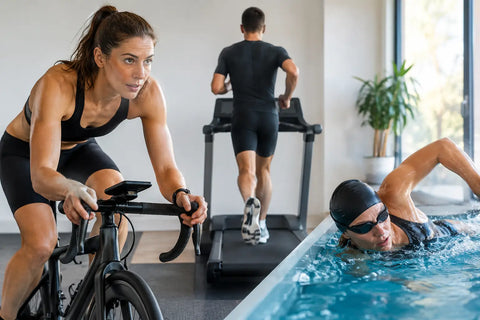
A former competitive swimmer in high school, Tang transitioned to triathlon at MIT—adding cycling and running to the swimming he already knew. The sport suits him. Where swimming rewards technique and feel for the water, triathlon rewards disciplined cross-training, intelligent pacing, and the mental toughness to keep moving when your body wants to stop.
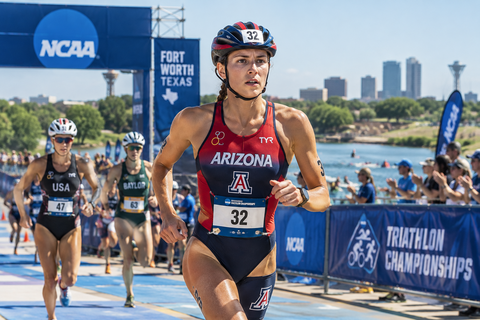
He placed third in his age group at the 2025 Boston Triathlon.
But the results aren't really the point. What Tang values is what the training does to him—the way it creates a space where everything else falls away.
"Swimming, biking, and running are good ways to de-stress," he says. "It's therapeutic in the sense that you can just let go. The race is just that culmination of letting it go at a more elevated level."
MIT's campus infrastructure helps him stay consistent. His dorm sits steps from the pool and the track—a proximity he credits with keeping training practical even during the most demanding academic stretches.
And then there's the motivational philosophy he's developed, one that translates directly to the demands of medical training:
"There are many days when you want to take it easy, but you have to remember the joy waiting for you at the end of the race when you've put in the work. It motivates me to be conscious and aware of what I'm doing in practice."
This is delayed gratification as a daily practice—not an occasional act of willpower, but a habit of mind. Medical students and residents who don't develop this capacity often struggle. The ones who learn it before they arrive carry a crucial advantage.
Tang also credits his family, particularly his younger brother, with sustaining his commitment. During summers, the two go out for long runs through the Boston suburbs.
"It is great to have my brother push me every day," Tang says. "There has been no one more supportive of me than my family."
That support network—family, mentors, teammates—is another element of Tang's story worth noting. Sustained excellence rarely happens in isolation.
For pre-med students: Your physical and mental wellness practices aren't separate from your professional preparation—they are part of it. Students who treat self-care as a luxury often find themselves burning out precisely when the demands peak. Build the habit now. Whether you're interested in sprint triathlons or simply maintaining a consistent training routine, the discipline you develop will serve you throughout your career.
Integration and Future Vision: Precision Oncology as a Career Goal
Everything in Tang's undergraduate story points toward a single destination, though it's a destination he describes in expansive terms.
Precision oncology is the practice of tailoring cancer treatment to the specific molecular characteristics of an individual patient's tumor—rather than applying one-size-fits-all protocols. It represents one of the most significant shifts in cancer care in decades, made possible by advances in genomics, immunology, and data science.
A physician-scientist pursues both a medical degree and advanced research training, typically through an MD-PhD program or combined research track. The goal is to practice medicine while simultaneously advancing the science that drives it—inhabiting both worlds rather than choosing between them.
"I want to advance precision oncology, ensuring that each patient receives the most effective, personalized treatment possible," Tang says.
And: "I want to bridge the gap between fundamental discoveries and tangible improvements in patient care."
What's striking about Tang's vision is how coherent it is. His chemistry and biology training gives him the molecular foundation. His cancer research gives him three years of hands-on experience in exactly the field he wants to enter. His journalism practice has trained him to communicate complex ideas with clarity and empathy. His athletic discipline has built the resilience that medical training demands.
None of this happened by accident. Tang made choices—some of them difficult, like holding a newspaper together during a crisis summer—that consistently reinforced the same set of values: rigor, service, communication, and endurance.
Final Thought: Passion as a Practice
One of Tang's most revealing moments in his story is a small one. Asked about his commitment to The Tech, he describes dropping everything when a breaking news story demands attention—stopping whatever else he's doing to handle what needs handling.
"I think that's what passion really is about," he says.
Not a feeling. A practice. The willingness to act—repeatedly, even inconveniently—on what you claim to care about.
As Tang heads into medical school, carrying his research notebooks, his journalism instincts, and his triathlete's tolerance for discomfort, that practice will be tested in new ways. But he has already demonstrated, across three and a half years at MIT, that he knows how to show up for what matters.
That might be the most important thing any pre-med student can learn.
Explore interdisciplinary opportunities in your own pre-professional journey. Whether it's joining a research lab, leading a campus organization, or committing to a physical practice that builds resilience—the goal isn't to do more. It's to do more things that connect. If you're interested in starting your own triathlon journey, check out our guide to AI-powered training apps or explore quality swim goggles and magnesium supplements for recovery to support your training.
Find the perfect training gear at TriLaunchpad — your triathlon journey starts here. Shop all collections →