The Ultimate Endurance Challenge: Antarctica's Only Triathlon Returns in January 2027
When most triathletes envision a challenging race, they think of steep climbs, turbulent waters, or grueling runs under the scorching sun. Now, imagine tackling all three in temperatures ranging from 25 to 35°F, with winds howling at 35 miles per hour, on one of the most remote and unforgiving terrains on Earth.
That's precisely what six athletes accomplished on December 8, 2025—and each one crossed the finish line with a smile.
The inaugural White Continent Triathlon made history as the first-ever swim/bike/run triathlon held on Antarctica. Marathon Adventures has now officially announced the second edition: January 18, 2027, once again on King George Island, in conjunction with the annual White Continent Marathon. If you've ever dreamed of racing in an extraordinary location, this is your moment to start planning.
A Historic First: What Happened on King George Island
Six Athletes, One Continent, Zero DNFs
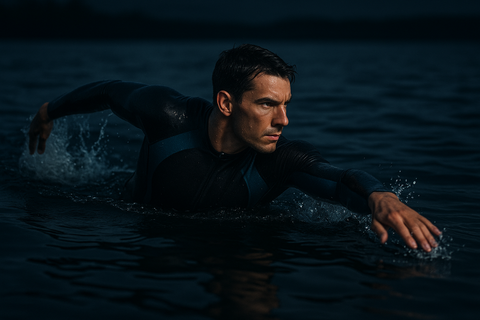
On a December morning in 2025, six triathletes plunged into near-freezing waters off the coast of King George Island, Antarctica. They faced 400 meters of swimming, 20 kilometers on a bike, and a 5-kilometer run—all against conditions that would deter most race directors before the start gun even fired.
The result? A 100% completion rate. All six athletes finished.
Steph Popelar from Elizabeth, Colorado, crossed the line first overall with a time of 2:04:20, while Kazimierz Szulist from Osielsko, Poland, took the top men's spot in 2:40:06. Notably, Dave Mandelkern from Hillsborough, California, and Lori Elliott from Jacksonville, Florida, became the first man and woman, respectively, to complete a swim/bike/run triathlon on all seven continents. Imagine that: every continent, every condition, one incredible athletic journey—capped off at the bottom of the world.
The Race Specifications
Don't let the shorter distances deceive you. This is not a sprint triathlon in any traditional sense:
- Swim: 400 meters (0.25 miles)
- Bike: 20 kilometers (12.4 miles)
- Run: 5 kilometers (3.1 miles)
Compared to a standard Olympic-distance triathlon—1.5km swim, 40km bike, 10km run—the White Continent format looks approachable on paper. But conditions multiply the difficulty exponentially. Cold water, icy terrain, and relentless wind transform each discipline into a test of survival as much as speed.
What Athletes Actually Face: The Extreme Conditions Breakdown
Cold That Rewrites the Rules
Racing in 25–35°F (-4 to 2°C) with winds gusting to 35 mph is not a minor inconvenience—it's a physiological challenge that demands specialized preparation. Hypothermia risk is real and immediate, particularly during the open-water swim. The body's ability to generate and retain heat is tested from the first stroke.
On the bike, icy and snow-packed terrain demands technical handling skills that most road cyclists never develop. A momentary lapse in concentration can mean a hard fall with limited emergency medical resources nearby. And on the run, cold-induced airway constriction makes breathing harder than it would be at sea level on a warm day.
The Mental Game
Physical fitness is the entry fee. Mental resilience is what gets you across the finish line.
Race director Steve Hibbs captured what made the inaugural group so remarkable:
“The inaugural White Continent Triathlon was an epic adventure and historic journey to one of the most unforgiving places on the planet to hold an endurance athletic event. The six triathletes participating were risk-taking pioneers who demonstrated an amazing sense of adventure, athleticism, and adaptability. Not only did each one finish the race, they finished with smiles on their faces.”
That last detail—the smiles—matters. Elite endurance athletes who seek maximum-difficulty events aren't just testing their bodies; they're chasing a specific kind of meaning that only comes from going somewhere most people never will. Antarctica has a way of putting the rest of life in sharp perspective.
Six Years of Planning: The Environmental Responsibility Behind the Race
Nothing Happens Fast in Antarctica
Marathon Adventures didn't decide to host a triathlon in Antarctica one afternoon and launch registrations the next morning. The inaugural event took more than six years to plan and execute. That timeline reflects the extraordinary complexity of operating in one of the world's most protected ecosystems.
Antarctica is governed by the Antarctic Treaty System, a framework of international agreements designed to preserve the continent for scientific research and protect its fragile environment. Getting permission to host an athletic event there means working within that system carefully and patiently.
EPA-Permitted, Zero-Compromise
The White Continent Triathlon was conducted under permits issued by the U.S. Environmental Protection Agency, with strict protocols designed to ensure no negative environmental impact. This means waste management procedures, wildlife protection measures, and careful oversight at every stage.
The 2027 edition will operate under the same permitting authority and environmental standards.
This matters beyond the race itself. As extreme sports increasingly push into protected or remote regions—from high-altitude peaks to polar zones—the White Continent model offers a template for how adventure events can operate responsibly. The environment doesn't have to lose for athletes to win.
The 2027 Edition: What You Need to Know
Mark Your Calendar
The second White Continent Triathlon is scheduled for January 18, 2027, on King George Island, Antarctica. It will run alongside the annual White Continent Marathon (26.2 miles), making the trip a potential multi-event expedition for those with the stamina.
The race format will mirror the inaugural event:
- 400m swim + 20km bike + 5km run
- Held under EPA environmental permits
- Organized by Marathon Adventures
The Full Experience: More Than Just a Race
This isn't a drive-to-the-start-line kind of event. The post-race experience includes camping overnight in Antarctica—a detail that elevates this from a triathlon into a genuine expedition. Athletes return home via Punta Arenas, Chile, making the journey itself a significant part of the story.
For athletes interested in 2027 registration details, qualification requirements, and updated logistics, the official source is Marathon Adventures at marathon-adventures.com.
Who Is This For?
The White Continent Triathlon isn't for first-timers. This event is best suited for:
- Experienced triathletes with multiple events completed across varied conditions
- Athletes actively pursuing seven-continent triathlon completion
- Endurance athletes with cold-weather racing or expedition experience
- Those with the physical and mental preparation to handle genuine wilderness conditions with limited on-course support
If you're newer to triathlon and building toward something like this, start by solidifying your gear foundation—explore our triathlon suit collection and swimming equipment to understand what serious endurance athletes rely on before stepping up to extreme conditions.
The Seven-Continent Dream: A New Standard for Endurance Achievement
What It Means to Race Every Continent
When Dave Mandelkern and Lori Elliott completed the White Continent Triathlon in December 2025, they closed the loop on a journey that spanned the globe. The seven continents for triathlon purposes are:
- North America
- South America
- Europe
- Africa
- Asia
- Australia/Oceania
- Antarctica
Until the first White Continent Triathlon, Antarctica was the missing piece. No swim/bike/run event had ever been held there. That meant the seven-continent achievement was literally impossible—no matter how dedicated or well-traveled an athlete was. Marathon Adventures changed that.
The Broader Significance for Endurance Sports
The Antarctica Triathlon fits into a growing pattern in endurance sports: athletes who have completed traditional bucket-list events—major marathons, long-distance triathlons, high-altitude races—are actively seeking what comes next. Events that test not just fitness but adaptability, logistics, and willpower in genuinely extreme environments are increasingly in demand.
What's remarkable about the White Continent model is that it proves this appetite can be served responsibly. Six years of permitting work, an EPA-approved framework, and a 100% completion rate from the inaugural field all point to an event that is ambitious but not reckless—extraordinary but not irresponsible.
For Latin American athletes with their sights on extreme endurance challenges, it's worth noting that the return route runs through Punta Arenas, Chile—one of the southern hemisphere's great gateway cities. Antarctica has always felt slightly closer from the Southern Cone, and that proximity is worth factoring into your planning.
Getting Ready: Practical Steps for Interested Athletes
If this race is on your radar for 2027, here's how to use the time between now and January wisely:
- Assess your foundation. Have you completed multiple triathlons, including in variable or adverse weather? Cold-weather racing experience is a major asset here. If you need to build your gear arsenal for the journey ahead, our triathlon suits and cycling gear collections cover essentials for serious athletes.
- Start cold-water acclimatization training. Open-water swimming in cold conditions is a specific skill. Begin systematically exposing yourself to lower water temperatures under controlled circumstances—ideally with a coach experienced in cold-water training.
- Consult expedition medicine specialists. The physical demands of racing in Antarctic conditions are different enough from standard triathlon preparation that specialist input is genuinely valuable. Hypothermia prevention, nutrition in the cold, and recovery in extreme environments all benefit from expert guidance.
- Budget comprehensively. Entry fees, international flights, specialized cold-weather gear, and travel insurance for expedition-level events add up quickly. Build your full budget early to avoid surprises.
- Monitor Marathon Adventures for 2027 registration. Visit marathon-adventures.com to stay current on registration openings, qualification standards, and any updates to the 2027 event details.
The Bottom Line
The White Continent Triathlon is genuinely historic. It's the only swim/bike/run event held on Antarctica. It carries a 100% inaugural completion rate. It crowned the first man and woman to finish a triathlon on all seven continents. And it did all of this while operating under strict environmental permits that protect one of Earth's last pristine wilderness areas.
The second edition is coming on January 18, 2027—and registration is the next step for any athlete serious about standing on that start line.
As race director Steve Hibbs put it, those inaugural six athletes finished with smiles on their faces. In conditions that most people would find merely surviving to be an achievement, they raced—and they smiled.
That says everything about what this event is and what it demands.
Ready to find out if you have what it takes? Start your preparation now at marathon-adventures.com and begin building toward the most extraordinary triathlon on the planet.
Have questions about cold-weather triathlon gear, training resources for extreme events, or building toward bucket-list races? Drop them in the comments below—we'd love to hear where your athletic journey is taking you.
When is the second White Continent Triathlon scheduled to take place?
The second White Continent Triathlon is scheduled for January 18, 2027.
Where will the second White Continent Triathlon be held?
The triathlon will be held on King George Island, Antarctica.
What are the components of the White Continent Triathlon?
The triathlon consists of a 400 meter swim, a 20 kilometer bicycle ride, and a 5 kilometer run.
What were the conditions like during the inaugural White Continent Triathlon?
Participants faced temperatures ranging from 25 to 35 degrees Fahrenheit and winds of up to 35 miles per hour during the race.
How many athletes competed in the first White Continent Triathlon?
Six athletes competed in the inaugural White Continent Triathlon.
What made the inaugural White Continent Triathlon a significant event?
It was the first swim/bike/run triathlon to take place in Antarctica, and all participants finished the grueling race successfully.
How was the first White Continent Triathlon planned to ensure safety and environmental protection?
The triathlon was planned over six years with permits issued by the US Environmental Protection Agency to ensure athlete safety and minimize environmental impact.
Where can I find additional information about the White Continent Triathlon?
Additional information can be found on the Marathon Adventures website at www.marathon-adventures.com/marathons/white.
Source: snowsportsnews.com