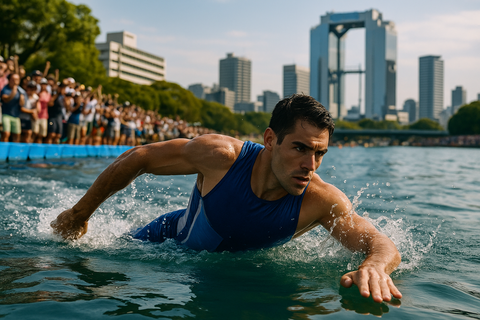
On August 20, 2023, two competitors — Brendan Wall and Ivan Chittenden — lost their lives during the swim leg of a long-distance triathlon in Youghal, Ireland. Nearly two years later, the investigation report commissioned by Triathlon Ireland remains unpublished, and grieving families are still waiting for answers.
What Happened at Youghal
Storm Betty had battered the Irish coastline in the days before the event, leaving sea conditions rough and unpredictable. Despite the deteriorating weather, the race proceeded. Both Wall and Chittenden died in the water during the swim stage, prompting an immediate wave of questions about who had assessed the conditions and who had ultimate authority to cancel or delay the start.
The tragedy sent shockwaves through Ireland's triathlon community and reignited a wider conversation about safety protocols, governance accountability, and the responsibilities of national sporting bodies when commercial race organizers are involved.
A Report Completed — But Not Released
Triathlon Ireland commissioned Grant Thornton to conduct an independent investigation. That report was completed in September 2024. More than six months on, it has not been made public. Triathlon Ireland has stated only that it is not in a position to release the document at this time, offering no firm timeline for publication.
"The families deserve to know what happened. Every additional month of silence compounds the pain of an already devastating loss."
The family of Brendan Wall has been vocal in calling for the report's immediate release. Without it, they say, they cannot fully understand the sequence of decisions that led to the race going ahead under dangerous conditions — and they cannot begin to find closure.
Conflicting Accounts on Safety Clearance
Adding to the distress of the families is a direct contradiction between the two organizations most responsible for the event. Triathlon Ireland has stated that it did not sanction the race owing to concerns about adverse conditions. The long-distance triathlon organizer, for its part, has asserted that it received no safety concerns from Triathlon Ireland until after the fatalities occurred.
Those two positions cannot both be true. Determining which account is accurate — and what communications passed between the parties before the start gun fired — sits at the heart of what the unpublished Grant Thornton report is said to address. The continued withholding of that document means the public record remains incomplete and contested.
Over €675,000 in Legal and Professional Fees
Triathlon Ireland's financial accounts reveal that the organization has spent more than €675,000 on legal fees connected to the Youghal incident since 2023. That figure encompasses costs related to the Grant Thornton investigation as well as broader legal counsel. For a national governing body funded substantially by membership fees, club affiliations, and public sport grants, the scale of that expenditure has drawn significant criticism.
Critics argue that a large portion of those funds has gone toward protecting the organization's legal position rather than toward transparency or support for affected families. Triathlon Ireland has not provided a detailed breakdown of how the legal budget has been allocated.
Clubs Push for Accountability
Grassroots pressure has been building within the Irish triathlon community. Galway Triathlon Club was among the clubs that sought to force an emergency general meeting to compel the board to address the transparency questions around legal spending and the withheld report. Those efforts encountered procedural obstacles that prevented the meeting from taking place on the terms the clubs had sought.
The episode highlighted a structural tension common to many national sporting bodies: member clubs theoretically hold democratic power, yet the mechanisms available to them to exercise that power can be slow, complex, and easily frustrated by a determined board.
Transparency is not a courtesy — in cases involving loss of life, it is an obligation.
Why This Matters Beyond Ireland
The Youghal tragedy and its aftermath carry lessons for the global triathlon community. Open-water swim conditions remain one of the sport's most serious risk vectors, and the decision framework for assessing and acting on those risks is not uniformly codified across events, distances, or jurisdictions. When a storm has recently passed, when seas are unsettled, and when two separate bodies each believe the other held responsibility for the safety call, the result can be catastrophic ambiguity.
Race safety culture improves fastest when incidents are examined openly, findings are shared, and recommendations are implemented. A report locked away in a legal holding pattern does the opposite — it protects no one and teaches nothing.
Frequently Asked Questions
What happened at the Youghal long-distance triathlon event on August 20, 2023?
During the Youghal long-distance triathlon event, two competitors, Brendan Wall and Ivan Chittenden, lost their lives while swimming due to challenging weather conditions following Storm Betty.
What is the status of the investigation report commissioned by Triathlon Ireland?
The report by Grant Thornton was completed in September 2024 but has not been published. Triathlon Ireland has stated that they are not in a position to release the report at this time.
How much has Triathlon Ireland spent on legal and professional fees related to the incident?
Triathlon Ireland has spent over €675,000 on legal fees related to the Youghal incident since 2023, including the costs associated with the investigation report.
What have the families of the deceased competitors requested regarding the investigation report?
The families, particularly the family of Brendan Wall, have called for the immediate publication of the investigation report to seek clarity and answers regarding the events surrounding the tragedy.
What conflicting statements have emerged between Triathlon Ireland and the race organizer regarding the safety of the race?
There are conflicting accounts regarding whether safety concerns were raised before the event. Triathlon Ireland claims it did not sanction the race due to adverse conditions, while the race organizer asserts that it was informed of no safety concerns until after the fatalities occurred.
What measures have some triathlon clubs taken regarding the financial spending by Triathlon Ireland?
Some triathlon clubs, like Galway Triathlon Club, have sought to force an emergency general meeting to discuss transparency regarding legal spending, but efforts to address these concerns have faced obstacles.
Source: The Journal — Triathlon Ireland Youghal Investigation Report