
4 Essential Lessons Triathletes Can Learn from Alistair Brownlee's 600km Bikepacking Victory
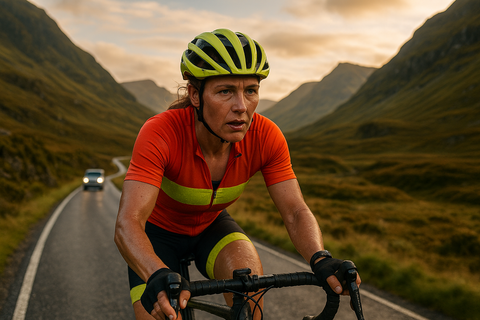
Alistair Brownlee, Britain's double Olympic triathlon champion, recently conquered the rugged 600km terrain of the Yorkshire Dales in just 35 hours. While this feat is impressive in its own right, the true victory lies in the lessons it offers to triathletes everywhere. Brownlee's venture into bikepacking—covering vast distances with minimal rest—demonstrates that off-road cycling isn't just a pastime for retired athletes. It's a powerful training tool that can enhance the strength, intelligence, and resilience of any triathlete.
Brownlee's journey into gravel and adventure cycling began even before his retirement from triathlon. Competing in events like the British Gravel Championships and the grueling Badlands race in Spain, he has embraced exploration and adventure. Whether you're preparing for your first sprint triathlon or aiming for an Ironman podium, here are four transformative lessons from Brownlee's bikepacking adventures that you can apply to your own training.
1. Build Mental Resilience Through "Fun Volume"
Triathlon training isn't just a physical challenge—it's a psychological one. Repeating the same routes can sap motivation and dull mental acuity long before race day. Bikepacking offers a refreshing alternative. Think of it as a mobile training camp: you accumulate significant training volume without the monotony of familiar roads. Each day presents new terrain and challenges, fostering a genuine sense of progress.
As Jack Evans, an experienced bikepacker and sports journalist, notes: "Because you're on the move, bikepacking can provide a greater sense of accomplishment than returning to your hotel or apartment every day. Once back on home roads, I tend to feel mentally rejuvenated for weeks to come—an undervalued but crucial aspect of training motivation."
This mental freshness is invaluable. Triathlon demands sustained focus across three disciplines, often over several hours. Training your brain to stay engaged and determined during long, grueling efforts is as crucial as building your aerobic engine. A bikepacking adventure, even a modest overnight trip, forces you to embrace discomfort and navigate the unexpected—skills that triathlon demands.
The takeaway: Swap a training weekend for a local bikepacking route. You'll return home physically loaded and mentally recharged—a combination that's hard to achieve any other way.
2. Master Race-Day Nutrition Through Real-World Testing
Poor fueling is a common race-wrecker, leading to bonking on the bike or stomach crises on the run. Bikepacking creates the perfect laboratory for testing your nutrition strategy under real-world conditions. When riding for consecutive days, there's no escaping fueling mistakes. Eat too little, and you'll pay for it tomorrow. Get it right, and you'll discover what your body truly needs.
The key numbers for multi-day cycling efforts align closely with triathlon race-day targets: 60 grams of carbohydrate per hour on the bike is a commonly cited benchmark for sustained endurance performance. Hitting that consistently across back-to-back days forces you to experiment with food types, timing, and quantities.
Evans learned this firsthand during a crossing of Ireland: "On my last day I had to time-trial into the wind for three hours. I felt strong enough to do so because I hadn't sunk into a massive calorific deficit on the previous days."
This kind of earned nutritional knowledge is invaluable. Rather than following a generic race-day fueling plan, you'll have a personalized strategy built on genuine experience. Consider supplementing your nutrition with quality electrolyte supplements to maintain optimal hydration during long rides.
The takeaway: A two or three-day bikepacking trip is worth months of single-session nutrition experiments. The consecutive-day challenge reveals your fueling blind spots before they surface on race day.
3. Develop Essential Mechanical Skills Under Pressure
Many triathletes are surprisingly helpless when their bike breaks down. In a race with support vehicles, that's inconvenient. In the middle of a remote moor with no signal and 40km to the nearest town, it's a genuine crisis.
Bikepacking changes your relationship with your bike. When you're miles from anywhere, the motivation to learn roadside repairs becomes real. The skills you develop under these conditions stick with you in a way that a YouTube tutorial simply doesn't.
The two most important skills to master before any bikepacking trip are:
- Tubeless tyre repair: Knowing how to plug a puncture with a tubeless plug kit is quick and reliable.
- Chain repair: A chain tool and a few quick links can save your entire adventure.
Evans speaks from experience: "In advance of my first voyage on tubeless gravel tyres, I had to learn how to fix a puncture with a tubeless plug."
These skills transfer directly to triathlon racing. A mechanical on the bike course doesn't have to end your race if you're confident and capable.
The takeaway: Learn your essential repairs in a controlled environment first, then put them into practice on a bikepacking route. By the time you face a mechanical in a race, you'll handle it with confidence rather than panic.
4. Sharpen Your Bike Handling for Faster, Safer Racing
Triathlon cycling often prioritizes aerodynamics and power output, but bike handling is an underappreciated skill that can make you both faster and safer. Bikepacking accelerates your handling development in a uniquely effective way. When your bike is loaded with gear, it handles differently, forcing you to look further ahead, choose your lines earlier, and commit to your trajectory with greater precision.
As Evans explains: "When you have all the gear you need for bikepacking on your steed, it handles very differently. It doesn't feel as responsive to steering input, making line choice and anticipation more important."
This is the cycling equivalent of training with a weighted vest. When you return to your unloaded triathlon bike, it will feel nimble and responsive. For those looking to upgrade their ride, consider exploring quality bikes with reliable components that can handle both training and adventure riding.
The takeaway: The loaded bike is a handling school. What feels challenging with gear feels effortless without it—and that improvement transfers directly to race day.
Getting Started: Your Bikepacking Action Plan
Brownlee's 600km Dales Divide victory is an extraordinary achievement, but the lessons are available to every triathlete. Here's how to start applying these lessons:
- Begin local: Plan a simple one or two-night bikepacking route from your front door.
- Practice your repairs first: Learn to plug a tubeless tyre and fix a broken chain.
- Test your nutrition on longer training rides: Build toward 60g of carbohydrate per hour.
- Embrace the loaded bike: Seek out hilly, technical routes with your gear loaded.
- Gradually increase the adventure: Look for organized bikepacking challenges or off-road triathlon events.
The good news? There's never been a better time to explore. Organized bikepacking challenges, gravel events, and even off-road triathlons are growing rapidly.
The Bottom Line
Alistair Brownlee's Dales Divide victory is a reminder that elite endurance athletes never stop seeking new challenges. For triathletes at every level, bikepacking offers a rare combination: serious training benefits wrapped in genuine adventure. Mental resilience, smarter nutrition, essential mechanical skills, and sharper bike handling—all can be developed on a bikepacking route in a way that conventional training rarely achieves.
You don't need to ride 600km or stay awake for 35 hours to reap the rewards. You just need to strap some bags to your bike, pick a route, and go. Track your progress with a reliable GPS watch, and remember that every adventure makes you a stronger, more capable triathlete.
Find the perfect cycling gear at TriLaunchpad — your triathlon journey starts here. Shop all collections →