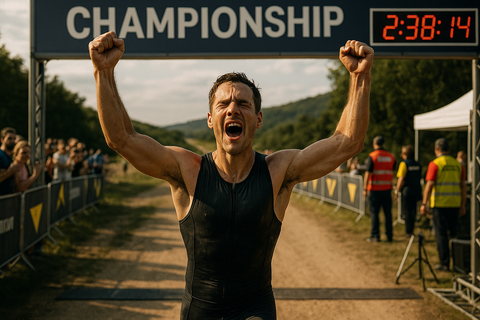
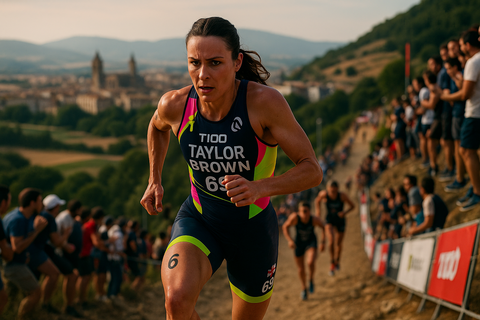
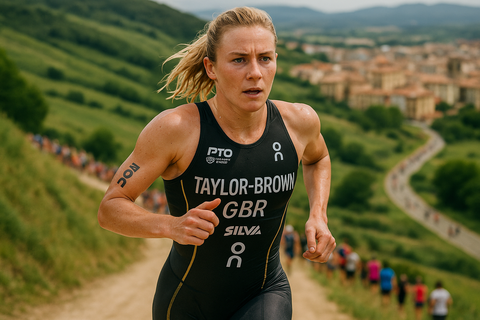
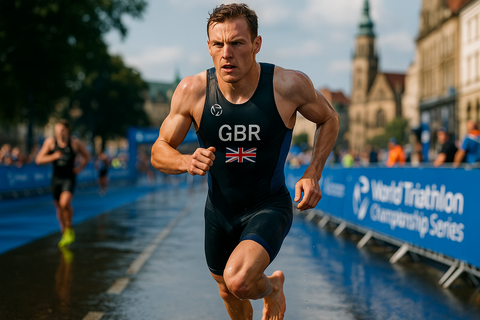
The Championship 2026 Results: How Pohle Conquered Her Demons and Palmer Dominated the Run
Imagine collapsing just 800 meters from a finish line you've trained months — maybe years — to reach. The crowd, the finish arch, the victory you can almost touch — and then nothing. Your body simply gives out. That was Caroline Pohle's reality at The Championship 2024. Two years later, on another scorching day at the x-bionic sphere in Šamorín, Slovakia, she returned to that same course, that same finish line, and rewrote her story entirely.
On May 24, 2026, Pohle and Britain's Harry Palmer claimed the top prizes at Challenge Family's flagship middle-distance event — a race covering 1.9km of swimming, 90km of cycling, and 21.1km of running — with a combined €100,000 prize purse on the line and an elite international field chasing every second. What unfolded wasn't just a race report. It was a masterclass in mental resilience, tactical courage, and knowing exactly when to strike.
Whether you're a devoted follower of elite triathlon, a competitive age-grouper looking for race-strategy insights, or someone who simply loves a great comeback story, The Championship 2026 delivered on every level.
The Women's Race: Pohle's Redemption Arc
The Weight of 2024
Before a single stroke was swum on Sunday, the emotional stakes for Caroline Pohle were already enormous. In 2024, she had been racing toward what should have been a breakthrough victory on this very course when her body failed her — just 800 meters from the finish line. That kind of experience leaves a mark. It's not just physical; it's psychological. Every training session, every race since then carries the shadow of that moment. Pohle arrived in Šamorín this year carrying that weight, but she faced it head-on.
"I just want to get to the finish line on Sunday and find my inner peace. I am mentally and physically good."
That quiet, focused determination — not bravado, not desperation — would define every decision she made over the next four hours.
The Swim: Playing It Smart from the Start
The action began in the Danube canal, where Britain's Sophia Green set the early pace and established a lead group with Germany's Lena Meissner and Spain's Marta Sánchez. Just six seconds separated that trio as they exited the water — racing at its tightest. Pohle emerged in fourth, 42 seconds adrift of the leaders, with the rest of the field a minute or more further back. To the untrained eye, it might have looked like a cautious start. In reality, it was calculated precision. By not burning matches in the swim to chase leaders she could reach on the bike, Pohle preserved exactly the energy she'd need for the segment where she planned to win the race.
💡 Amateur Takeaway: In middle-distance racing, the swim sets position but rarely decides outcomes. Entering T1 in the top 5 — even 40+ seconds back — leaves plenty of racing left to do.
The Bike: Where the Race Was Won
The single-lap, 90km bike course through the Slovakian countryside is where Pohle didn't just compete — she dominated. She first bridged up to the lead group, then swept past them with a power output that shattered the women's bike course record by three minutes. By the time she rolled into T2, the gaps told the whole story:
- Meissner: +2:39
- Sánchez: +2:45
- Green: +4:14
"I took a risk by attacking on the bike but it worked and I'm so happy." — Caroline Pohle
This is a crucial strategic point. Pohle knew her great rival Meissner is a formidable runner — the two had previously battled to an epic sprint finish at the 70.3-distance European Championship in Jönköping in 2025. A close race into T2 would play directly into Meissner's hands. By building an insurmountable bike advantage, Pohle was essentially choosing the terrain of the final battle — and she chose wisely. The bike leg is the longest segment in middle-distance triathlon (90km of a 112km total race), and power differences compound over distance. A 2–3 minute gap at T2 is very hard to close on a 21.1km run, even for an elite runner.
The Run: Composure Under Pressure
Knowing Meissner's run strength, Pohle didn't relax. She pushed hard from the first step off the bike — because in triathlon, you never know until you cross the line. The gap did come down as the run progressed, but it never threatened Pohle's lead. She crossed the finish line in 3:55:39, composed and triumphant, with Meissner 1:32 behind in second and Denmark's Katrine Græsbøll Christensen finishing a strong third at +2:54.
"In 2024 I collapsed 800 metres before the finish line so you never know when it's over, but I pushed really hard until the end as I know Lena is really strong on the run." — Caroline Pohle
The psychological dimension here cannot be overstated. Running the final kilometers knowing a strong rival is behind you, on a course where you previously collapsed — and holding your form, your pace, your composure — that's not just fitness. That's a different kind of strength entirely.
What Pohle Said When It Was Over
"I can't describe the feeling because I'm so happy and so proud of myself and my team. I took a risk by attacking on the bike but it worked and I'm so happy. In 2024 I collapsed 800 metres before the finish line so you never know when it's over but I pushed really hard until the end as I know Lena is really strong on the run."
What's next for the German champion? She'll make her full-distance debut at Challenge Roth in early July — a natural next step for an athlete who just proved she has both the physical tools and the mental fortitude to compete at the highest level.
The Men's Race: Palmer's Patient, Brilliant Comeback
The Swim: Early Movers Set the Stage
On the men's side, Germany's Hannes Butters did what he typically does — flew out of the water. He held roughly a 30-meter lead at the turn point of the out-and-back Danube canal swim before Britain's Kieran Lindars closed to within 7 seconds as they exited, with Butters recording a 21:46 swim split. Denmark's Valdemar Solok was the quickest through T1, positioning himself at the front of the bike leg — transition efficiency that would prove enormously significant.
The Bike: Solok's Stunning Solo Effort
Valdemar Solok put on a cycling clinic that made the rest of the field look like they were on a different race. Riding completely solo from early in the bike, Solok had Estonia's Henry Räppo in second — but already 2 minutes back at the 45km turnaround. By T2, the gaps were:
| Athlete | Gap to Solok at T2 |
|---|---|
| Henry Räppo (EST) | +3:11 |
| Hannes Butters (GER) | ~+3:00 |
| Harry Palmer (GBR) | ~+3:00 |
| Kieran Lindars (GBR) | ~+3:30 |
| Fred Funk (GER) | +4:04 |
| Will Draper (GBR) | +4:07 |
Three-plus minutes is a substantial gap heading into a 21.1km run — the kind of lead that, for most athletes, is race-deciding. Palmer would later admit he stepped off the bike thinking he might be fighting for second. Most athletes in that position would mentally settle. Palmer did the opposite.
The Run: The Greatest Comeback of the Day
On the first of five run laps, Palmer made his move — and it was immediately clear this was no ordinary runner finding his legs. He took just over a minute out of Solok in that opening lap alone. Then came the relentless math of the chase: lap by lap, the gap shrank. After lap one, it was down to 2:10.
"I got off the bike and was three minutes back and thought I might be fighting for second but when it was down to 2:10 after the first lap I was like 'we've got a race on here'. It was all about chipping away – I like the tough run course and the mixed terrain, it kind of suits me. I just got into a good rhythm and managed to get past him on the last lap. Very nice to take the win here today – I just did my own thing and it paid off in the end." — Harry Palmer
Palmer overtook Solok after approximately 17km — with about 4km remaining — and crossed the line in 3:31:55. Solok held on brilliantly for second, just 34 seconds back. Will Draper produced a strong late surge to overtake Räppo and claim third at +2:04.
Palmer's Winning Formula: Self-Knowledge + Execution
What's striking about Palmer's performance isn't just the comeback — it's the clarity of his self-knowledge. He didn't try to ride with Solok. He didn't panic on the run when the deficit still looked large. He trusted his strengths — mixed terrain, tough run course — found his rhythm, and executed his race, not Solok's race, not anyone else's.
"I just did my own thing and it paid off in the end." — Harry Palmer
That's a deceptively simple statement from someone who just overhauled a 3-minute lead in 21 kilometers. It reflects a level of race-day composure and strategic clarity that separates good athletes from champions.
Tactical Lessons from The Championship 2026
Both races offer genuinely useful insights — not just for elite athletes, but for any triathlete training for their first or fifth middle-distance race.
1. The Bike Leg Often Decides Middle-Distance Races
The numbers from both races make this point forcefully. Pohle built a 2:39 advantage on the bike — enough to absorb Meissner's superior run. Solok built a 3:11 advantage on the bike — nearly enough to hold off Palmer's exceptional run. The bike is 90km of a 112km race. It's where the most time can be gained or lost. If you want to improve your middle-distance results, prioritize your bike training. Not at the expense of your run, but recognizing that this is where races are most often shaped.
2. Run Strength Enables Tactical Flexibility
Conversely, Palmer's comeback reminds us that no bike lead is completely safe. A 3-minute deficit became a 34-second victory because of exceptional run fitness and pacing. Strong run legs give you options — whether that means defending a lead like Pohle or mounting a chase like Palmer.
3. Know Your Strengths and Build Your Strategy Around Them
Both winners raced to their individual strengths rather than reacting to their competitors. Pohle identified the bike as her winning weapon and attacked decisively. Palmer identified tough, mixed-terrain running as his edge and trusted it under pressure. For age-groupers, this translates directly: your race plan should reflect your actual strengths, not an idealized version of how triathlon "should" be raced.
4. Mental Resilience Is a Trainable Skill
Pohle's comeback from the 2024 collapse, and Palmer's composure when facing a 3-minute deficit, both point to the same truth: elite racing is as much psychological as physical. The athletes who win aren't necessarily those with the best numbers on paper — they're the ones who keep making good decisions under pressure. This isn't exclusive to professionals. Every triathlete — from athletes lining up in their triathlon race suit to experienced age-groupers — faces moments in races where the mental game determines the outcome.
The Venue: x-bionic sphere, Šamorín
The Championship is staged at one of triathlon's most distinctive venues — the x-bionic sphere complex in Šamorín, Slovakia, roughly 30 minutes from Bratislava. The course breaks down as follows:
- Swim (1.9km): Out-and-back in the Danube canal — fast, flat, and highly competitive
- Bike (90km): Single-lap route through the Slovakian countryside — the segment where both races were effectively decided
- Run (21.1km): Five-lap course that rewards mental toughness as much as physical fitness
Race day brought another hot day in Slovakia, with heat management playing a significant role in pacing and nutrition decisions. Both winners demonstrated superior conditioning and pacing discipline — neither blew up in the heat despite racing at the absolute limit of their abilities. Pohle's bike split was so exceptional that she obliterated the women's course record by three minutes — a benchmark that speaks to both the quality of the performance and the challenging nature of the course under hot conditions.
Complete Results: The Championship 2026
Men's Top 10
| Position | Athlete | Nationality | Time | Gap |
|---|---|---|---|---|
| 1 | Harry Palmer | GBR | 3:31:55 | — |
| 2 | Valdemar Solok | DEN | 3:32:29 | +0:34 |
| 3 | William Draper | GBR | 3:33:59 | +2:04 |
| 4 | Henry Räppo | EST | 3:34:54 | +3:00 |
| 5 | Jannik Schaufler | GER | 3:35:10 | +3:16 |
| 6 | Florian Angert | GER | 3:35:45 | +3:51 |
| 7 | Frederic Funk | GER | 3:35:54 | +4:00 |
| 8 | James Teagle | GBR | 3:36:29 | +4:35 |
| 9 | Kieran Lindars | GBR | 3:36:37 | +4:43 |
| 10 | Ognjen Stojanovic | SRB | 3:37:00 | +5:06 |
Notable: Germany placed three athletes in the top 7 (Schaufler, Angert, Funk), while Great Britain had four athletes in the top 10 (Palmer, Draper, Teagle, Lindars). The top three were separated by just 2 minutes and 4 seconds — extraordinarily tight racing.
Women's Top 10
| Position | Athlete | Nationality | Time | Gap |
|---|---|---|---|---|
| 1 | Caroline Pohle | GER | 3:55:39 | — |
| 2 | Lena Meissner | GER | 3:57:11 | +1:32 |
| 3 | Katrine Græsbøll Christensen | DEN | 3:58:32 | +2:54 |
| 4 | Elisabetta Curridori | ITA | 4:01:43 | +6:05 |
| 5 | Marta Sánchez Hernandez | ESP | 4:02:21 | +6:43 |
| 6 | Francesca Crestani | ITA | 4:03:45 | +8:07 |
| 7 | Justine Guerard | FRA | 4:06:34 | +10:56 |
Frequently Asked Questions
Who won The Championship 2026 for men and women?
Harry Palmer from Great Britain won the men's title, while Caroline Pohle from Germany won the women's title.
What was the prize purse for The Championship 2026?
The prize purse for The Championship 2026 was €100,000.
What distances were raced in The Championship 2026?
The Championship 2026 consisted of a 1.9 km swim, a 90 km bike ride, and a 21.1 km run.
What were the final times for the winners in The Championship 2026?
Harry Palmer finished with a time of 3:31:55, and Caroline Pohle finished with a time of 3:55:39.
How did Caroline Pohle perform during the race?
Caroline Pohle overcame challenges from previous events, leading the bike section and maintaining her position to secure her victory, finishing 1:32 ahead of her closest competitor, Lena Meissner.
Source: tri247.com — Challenge Family The Championship 2026 Results Report