From Burnout to Breakthrough: How Triathlon Empowers Athletes with Intellectual Disabilities
Triathlon is emerging as one of the most transformative disciplines in adaptive athletics — demanding everything from the body and mind across three consecutive disciplines, and giving back something no other sport quite can: the unshakeable knowledge that you finished what you started.
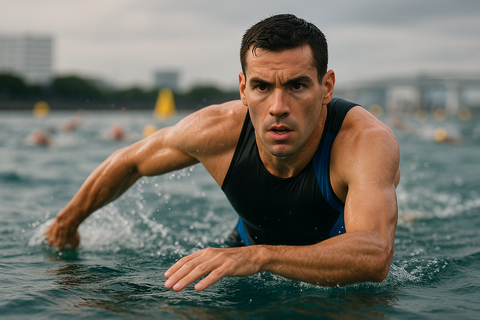
Jolein's feet burned as they struck the pavement. She had lost count of the number of steps she had taken. Her legs ached. Her lungs worked overtime. But only one thought looped through her mind:
"The cycling is done, it's almost over — just a bit of running left, and my coach will be waiting proudly at the finish line."
Then she heard the crowd. Cheers and shouts of encouragement rippled toward her before she could even see the finish. Her coach came into frame. The ache in her legs was still there — but her mind had already won the race.
That moment at the 2025 Special Olympics European Triathlon Open Competition captures everything that makes triathlon uniquely powerful for athletes with intellectual disabilities. It is not just a sport. It is a crucible — one that forges physical strength, mental resilience, and an unshakeable sense of belonging.
And the movement is growing fast. What began as a single event hosted by Special Olympics Latin America in 2010 has expanded to more than 2,000 athletes competing across 35 programs in 4 regions worldwide. The 5th Annual Special Olympics European Triathlon Competition, set for May 23, 2026, in Šamorín, Slovakia, will bring together 31 athletes from 10 countries — proof that this sport's reach is accelerating.
In this post, you will discover why triathlon is emerging as one of the most transformative sports in adaptive athletics, how one Dutch athlete turned pandemic restlessness into a podium finish, and what this growing movement means for the future of inclusive sport.
Why Triathlon Is Unlike Any Other Sport
Three Disciplines, Zero Breaks
To understand why triathlon matters for athletes with intellectual disabilities, you first need to appreciate what triathlon actually demands of any athlete. A sprint-distance triathlon — the format used in Special Olympics competition — combines a 750-meter swim, a 20-kilometer bike ride, and a 5-kilometer run, completed sequentially with no rest periods between disciplines. Athletes move through transition zones, swapping equipment and mental gears, before pressing on.
There is no halftime. No rotation. No substitution. Just you, the course, and whatever reserves you have left. This is an endurance sport that tests both body and mind simultaneously. Athletes must master three distinct techniques, maintain strategic pacing across wildly different physical demands, and sustain focus even when fatigue is trying to negotiate a surrender.
As Kester Edwards, Special Olympics Manager of Sport and Development — a 30-year veteran of the movement — puts it:
"Triathlon is a sport that challenges the body and mind. For Special Olympics triathletes, the sport challenges them across three unique disciplines, showcasing their individual grit and determination all the way through the finish line."
That grit is not incidental. It is the whole point.
Personal Best Over Podium Position
What makes triathlon particularly well-suited for inclusive athletics is its built-in flexibility. Unlike team sports where individual performance is filtered through collective results, triathlon allows every athlete to compete against their own previous best. The finish line belongs to everyone.
This structure creates a natural environment for athletes of all abilities to coexist — competing in the same event, under the same sun, working toward goals that are entirely their own. A 19-year-old completing her first international triathlon and an experienced multi-season competitor are both, in their own way, winning. That philosophy of personal achievement over comparative ranking removes one of the most significant psychological barriers to sport participation: the fear of not being good enough.
The Growth Story That Proves It Works
Numbers tell part of this story. In 2010, Special Olympics Latin America hosted the very first triathlon event — a regional experiment that pointed toward something larger. By 2015, a formal global triathlon program launched. Today, the sport has reached 2,000+ athletes, 597 coaches, and 35 programs spanning 4 regions.
Edwards reflects on that trajectory with clear pride:
"Since 2010, when Special Olympics Latin America hosted the first-ever triathlon event, each of our flagship events — World Summer Games — triathlon has been featured. Now triathlon is in 3 additional Special Olympics regions with 35 programs, over 2,000 athletes, and 597 coaches."
That kind of sustained, decade-long growth does not happen by accident. It happens because athletes are finding something in this sport they cannot find elsewhere.
Jolein's Story: From Pandemic Restlessness to a Podium
A Hobby That Became a Calling
Jolein Boom grew up in Finsterwolde, in the Netherlands — a small village near the German border, far from any elite sports infrastructure. When the COVID-19 pandemic settled in and the world contracted, Jolein got restless. She started running. And she discovered, somewhat to her own surprise, that she was good at it.
When she mentioned this to her father, his response was practical and encouraging in equal measure: she was already a good swimmer and a good cyclist, and now she was a runner — so why not do all three? It was, in retrospect, the right question at the right moment. Jolein began training for triathlon.
Five Days a Week, Three Disciplines at a Time
Jolein's approach to training was methodical. Five days per week across all three disciplines, beginning with proper technique and progressively working toward more advanced movements each week. She did not train at a dedicated triathlon club — because triathlon is not yet mainstream enough for those to be easily accessible everywhere. Instead, she joined local swimming, cycling, and running clubs separately.
In those clubs, she trained alongside athletes with and without intellectual disabilities — everyone showing up for the same sport, learning from each other, pushing each other forward. That integrated environment became one of the most meaningful parts of her triathlon journey.
"I trained a lot with other athletes. They aren't from the triathlon world, but we are doing the same sport at that moment. It's fun and you learn a lot from each other." — Jolein Boom
This is the quiet power of mixed-ability training. It does not just build physical capacity. It normalizes inclusion in a way that formal programs cannot fully manufacture. When you are sweating through intervals with someone who happens to have a different ability profile, what remains is a shared sport.
The Mental Game: Breaking the Race Into Pieces
Race day is where training either holds or breaks. For Jolein, the mental strategy is as structured as her physical preparation. She does not try to hold the whole race in her mind at once. Instead, she breaks it into psychological segments — reaching checkpoints rather than chasing a distant finish. Once the swim is done, focus on the bike. Once the bike is done, the run is almost a relief.
"I just continue to think that once the cycling is done, it's almost over — just a bit of running left, and my coach will be waiting proudly at the finish line." — Jolein Boom
That strategy — converting a daunting whole into manageable parts — is not unique to triathlon, but triathlon makes it necessary. Every athlete who completes a race is, in some sense, also completing a graduate course in psychological resilience. Jolein's reward for that resilience? A first-place podium finish at the 2025 Special Olympics European Triathlon Open Competition. Now, ahead of the 2026 edition in Slovakia, she serves as an ambassador for the next wave of athletes following in her footsteps.
The Inclusive Model: How Special Olympics Makes Triathlon Accessible
Meeting Athletes Where They Are
One of the most honest things about the Special Olympics triathlon program is how it acknowledges a structural reality: triathlon clubs are not yet widely available everywhere in the world. Rather than waiting for that infrastructure to arrive, the program adapts. Athletes like Jolein train across separate discipline-specific clubs — swimming programs, cycling groups, and running clubs — which exist in nearly every community. By threading these together into a coherent training pathway, Special Olympics creates accessibility without requiring purpose-built facilities.
The sprint distance format (750m / 20km / 5km) also ensures that competition is demanding but achievable — a significant consideration for athletes at varying fitness levels and experience stages.
Building Coaching Capacity at Scale
Behind every athlete is a coach. Behind 2,000+ athletes are 597 coaches — each trained to support Special Olympics triathletes through the specific demands of multi-discipline competition. Kester Edwards has been central to building that coaching infrastructure, drawing on his work establishing open-water swimming as an official Special Olympics sport to expand triathlon programming globally.
The coaching network is not just logistical. Coaches like the one Jolein pictures at the finish line are emotional anchors. They carry the weight of an athlete's confidence when the athlete cannot. They show up at the finish line precisely because they know their presence matters.
Competing Alongside the Elite
One of the most powerful structural decisions in the Special Olympics triathlon model is the integration of events with mainstream competition. The 2026 European Championship in Šamorín, Slovakia is hosted alongside Challenge Family's flagship middle-distance race — an event that draws professional triathletes and elite age-groupers from around the world.
This is not tokenism. When 31 Special Olympics athletes compete in sprint distance on the same course, on the same weekend, as elite triathletes, something important happens: mainstream athletes and spectators witness capability firsthand. The narrative of what is possible expands for everyone in attendance. The competitive ecosystem creates ripples far beyond the starting gun.
Beyond the Finish Line: What Triathlon Actually Changes
The Moment That Changes Everything
On May 20, 2025, 19-year-old Dominika Medveďová from Brezno, Slovakia, crossed the finish line of the 4th Special Olympics European Triathlon Open Competition. She had swum 750 meters, cycled 20 kilometers, and run 5 kilometers — becoming the first Slovak woman with cerebral palsy to complete an international triathlon. There were tears at the finish line.
Moments like Dominika's and Jolein's represent something that statistics cannot fully capture: the shift in a person's understanding of their own capability. Before the race, the question is whether they can do it. After the finish line, that question is permanently retired. Athletes move from person with a disability to triathlete — and that identity shift matters not just for the individual, but for their families, their communities, and the broader culture's understanding of what intellectual disability does and does not limit.
Health, Confidence, and Community
The physical benefits of endurance training are well-documented: improved cardiovascular fitness, increased muscular strength, better sleep, and enhanced energy regulation. For athletes with intellectual disabilities, who as a population face significant health disparities compared to the general population, these outcomes are transformative rather than incidental.
Athletes who train and compete regularly report increased self-efficacy, reduced anxiety, and a stronger sense of belonging. The social environment of sport — the shared effort of hard training, the camaraderie of race day, the validation of a crowd cheering your name — creates connections that are difficult to replicate in any other context. Training in mixed-ability environments also reduces stigma through the simple, repeated experience of sharing a sport with people across the full spectrum of ability.
Athletes as Leaders
The transformation does not stop at the finish line. Special Olympics athletes are increasingly stepping into advocacy and leadership roles — speaking on Capitol Hill, publishing books, hosting podcasts, and mentoring incoming competitors. Jolein herself now serves as an ambassador for the 2026 European Championship, the athlete who competed in 2025 helping to light the path for the 31 athletes preparing to race in Slovakia.
The Inclusion Revolution Radio podcast, athlete-led and athlete-centered, amplifies these voices beyond the sport itself — reaching audiences who may never stand near a transition zone but who benefit from hearing what these athletes have to say about grit, identity, and possibility.
The Road Ahead: Triathlon's Growing Stage
The calendar ahead for Special Olympics triathlon reads like a movement gaining momentum.
- May 23–24, 2026: 5th European Triathlon Championship, Šamorín, Slovakia — 31 athletes, 10 countries
- June 2026: USA Games in Minnesota — a national platform for triathlon visibility, with 3,000 athletes and 75,000 fans expected
- October 2027: Santiago World Summer Games — triathlon featured on the global stage
- 2029: Switzerland World Winter Games — exploring continued innovation in the sport's competitive calendar
Meanwhile, the first-ever Para Triathlon Mixed Relay World Championships took place at the Championship Finals in Torremolinos, Spain in October 2025 — a milestone that signals the broader sports world is paying close attention. As visibility grows, so does the pipeline of athletes, coaches, sponsors, and institutional supporters who recognize what this sport uniquely offers.
Key Takeaways
- Triathlon's multi-discipline structure uniquely builds physical, mental, and emotional resilience — demanding more of athletes than single-sport programs, and delivering more in return.
- The inclusive training model works: mixed-ability clubs and mainstream event integration create authentic belonging, not just symbolic participation.
- Growth is exponential: from one event in Latin America in 2010 to 2,000+ athletes across 35 programs and 4 regions in 2025.
- Individual stories are the data that matters most: Jolein's podium and Dominika's tears at the finish line represent thousands of athletes discovering capability they were never told they had.
- Mainstream recognition is accelerating: the Challenge Family partnership and first-ever Para Triathlon World Championships signal that the broader sports world is catching up.
Join the Movement
Whether you are drawn to triathlon as an athlete, a coach, a family member, or simply someone who believes that sport should be for everyone — there is a role for you in this movement. 31 athletes from 10 countries will line up in Šamorín, Slovakia on May 23, 2026, ready to push through burning feet, broken pace, and mounting fatigue — all the way to the finish line.
You can follow their journey and stay current with results at the official 2026 European Championship results page. To find your local Special Olympics program — whether as an athlete, coach, official, or volunteer — visit specialolympics.org/programs. With 35 programs across 4 regions, the starting line is closer than you think.
The race is not just for the faint of heart. Neither is the work of making sport truly inclusive. But both are worth every step.
Looking for gear to support your own triathlon journey or the athlete in your life? Explore our triathlon suits, swimming goggles, and running shoes.
Frequently Asked Questions
What is Special Olympics?
Special Olympics is a global organization that supports athletes with intellectual disabilities through sports training and athletic competition, promoting health, inclusion, and leadership.
How can I find a Special Olympics program near me?
You can find a local Special Olympics program by visiting the Special Olympics website and using their program finder tool, which allows you to choose programs based on your location.
What types of sports are included in the Special Olympics?
Special Olympics supports over 30 Olympic-type sports, offering year-round training and competitions for athletes of all abilities.
How can I get involved with Special Olympics?
You can get involved by becoming an athlete, volunteer, coach, or official through the Special Olympics website, where you can find information tailored to each role.
What is the Revolution Is Inclusion campaign?
The Revolution Is Inclusion is a campaign aimed at ending discrimination against people with intellectual disabilities and promoting inclusion through sports and community engagement.
What upcoming events does Special Olympics have?
Upcoming events include the Unified Football World Cup in Paris in July 2026, the Special Olympics World Games in Santiago in October 2027, and the Special Olympics World Winter Games in Switzerland in March 2029.