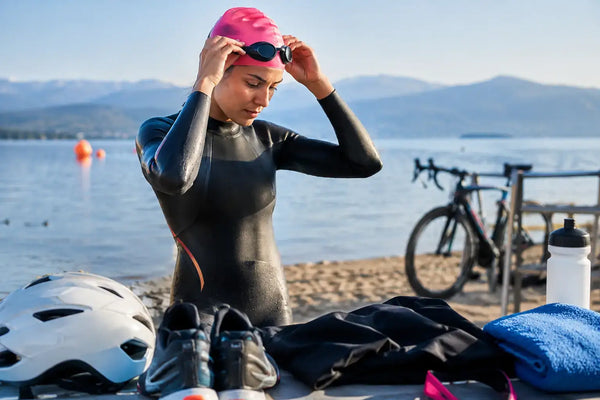

While the triathlon world often buzzes about the latest in carbon-fiber bikes and carbon-plated running shoes, Sanders points to a more fundamental element that has revolutionized the sport—carbohydrate intake. This shift in focus from equipment to nutrition marks a significant departure from traditional views and aligns more closely with the needs of high-performance athletes today.
Reflecting on the Mark Allen Era: A Nutritional Perspective
Consider the legendary Mark Allen, who clinched the 1989 IRONMAN World Championship with a remarkable 2:40 marathon—achieved, as Sanders notes, with minimalistic footwear and likely modest carbohydrate support. Allen's era was characterized by less emphasis on nutritional strategies that are standard today, making his achievements all the more extraordinary.
During Allen's reign from 1989 to 1995, the approach to sports nutrition was still maturing. Athletes of that time often consumed fewer carbohydrates during races than what is now deemed optimal, operating under nutritional guidelines that were quite conservative by today's standards.
The Modern Carbohydrate Revolution
Sanders argues that today's triathletes enjoy a substantial competitive edge, primarily due to a significant increase in carbohydrate consumption during races. This nutritional strategy shift is perhaps the most profound change in the sport, overshadowing even the most sophisticated aerodynamic and equipment innovations.
For instance, Sanders himself has transformed his approach:
- Previously: About 50g of carbs per hour, leading to a substantial calorie deficit.
- Currently: More than 150g of carbs per hour, drastically reducing his calorie deficit and enhancing his endurance and performance, especially in the latter stages of races.
This evolution in nutritional strategy underscores a critical aspect of modern triathlon performance: efficient energy management is key.
Debating Equipment vs. Nutrition
While the triathlon community often focuses on technological advancements like carbon-plated shoes, Sanders remains skeptical of their impact compared to the benefits of optimized carbohydrate intake. He suggests that the real game-changer has been the dramatic shift in how athletes fuel their bodies, proposing that enhanced nutrition has played a more pivotal role in performance improvements than any equipment upgrades.
Lessons from Lionel Sanders' Experience
Sanders' journey underscores the importance of adequate fueling. Having battled with Relative Energy Deficiency in Sport (RED-S), he has firsthand experience of how critical proper nutrition is, not only for performance but also for overall health. His personal evolution in managing his diet reflects a broader shift from restrictive eating to performance-focused fueling.
Key Takeaways for Age-Group Triathletes
- Reevaluate Carbohydrate Intake: Ensure you're consuming enough carbohydrates to meet the demands of your training and racing.
- Understand Your Energy Deficit: Keep track of the calories you consume versus what you burn to identify potential improvements.
- Adapt Your Gut: Gradually increase your carbohydrate intake during training to enhance your body's ability to handle it during races.
- Prioritize Nutrition Over Weight: Focus on what your body needs to perform at its best, especially during crucial training and racing periods.
- Experiment with Carbohydrate Sources: Find the carbohydrate mix that works best for you to optimize energy absorption and minimize digestive issues.
The True Revolution in Performance
Sanders' perspective invites us to rethink what drives triathlon performance. While technological advancements have their place, the ability to efficiently fuel the body during extended physical exertion is perhaps the more critical factor. This shift from less than 90g to over 150g of carbs per hour is not just a change; it's a nutritional revolution in triathlon.
For those looking to maximize their potential, the advice is clear: before splurging on the latest gear, make sure your nutritional game is on point. The most significant gains might not come from what you wear, but from what you consume.
As Sanders prepares for upcoming championships, his strategy is straightforward—focus on the fundamentals like solid bike work, challenging swim sessions, and, crucially, impeccable nutrition. This approach not only highlights the evolution of triathlon but also serves as a blueprint for athletes aiming to optimize their performance in this demanding sport.
 Mar 14, 2027IRONMAN 70.3 Dallas-Little Elm
 Mar 14, 2027IRONMAN 70.3 Puerto Rico
 Mar 14, 2027IRONMAN 70.3 Hengqin
 Mar 20, 2027IRONMAN 70.3 Doha
 Mar 21, 2027IRONMAN 70.3 Geelong
 Mar 21, 2027T100 Triathlon Gold Coast