Lionel Sanders Triumphs at Ironman 70.3 Dallas 2026: Weather Turns the Tide for a Remarkable Victory
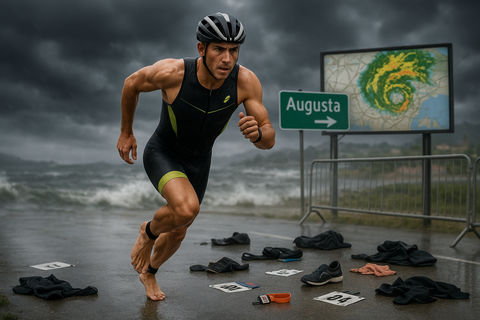
March 15, 2026, was a day when the skies over Little Elm, Texas, conspired to create a unique opportunity rather than chaos. For Lionel Sanders, the Canadian triathlon legend known for his formidable bike and run prowess, the weather-induced changes to the race format were nothing short of a divine intervention. The dramatically shortened swim segment played perfectly into his hands, setting the stage for a spectacular display of dominance that reverberated across the triathlon community. Sanders' victory at Ironman 70.3 Dallas–Little Elm wasn't just a win; it was a powerful declaration of his readiness for what could be his most challenging and final competitive season.
In this season's first major middle-distance event, Sanders dismantled a strong professional field with a performance that left no room for doubt. His winning time of 3:17:12 was more than just a number; it was a testament to his strategic acumen and physical prowess. Let's delve into how this race unfolded, its implications for the competitive landscape, and why it should capture the attention of every triathlete.
Race Day Drama: Weather as the Great Equalizer
Ironman 70.3 races are designed to test athletes across swimming, cycling, and running. However, on this day, Mother Nature had other plans. Severe weather conditions and strong currents in the lake forced race organizers to make tough decisions. For the age-group athletes, the swim was canceled entirely. The professional field faced a modified start with a significantly shortened 350-meter swim instead of the usual 1.9 kilometers.
To put this in perspective, the pros swam only 18% of the normal distance. Typically, the swim creates time gaps between strong and weak swimmers, but at 350 meters, the entire field exited the water almost simultaneously, nullifying any swim-based advantage.
For Sanders, this was transformative. The swim has traditionally been his Achilles' heel, where he often loses precious minutes to rivals. With the shortened distance, Sanders emerged from the water among the leaders, perfectly positioned for the bike leg.
The decision was crucial for athlete safety but also altered the race dynamics. In triathlon, the swim doesn't just set time gaps; it determines tactical positioning. On this day, Sanders found himself exactly where he needed to be from the start.
The Bike Breakaway: Sanders and Arnold Lead the Charge
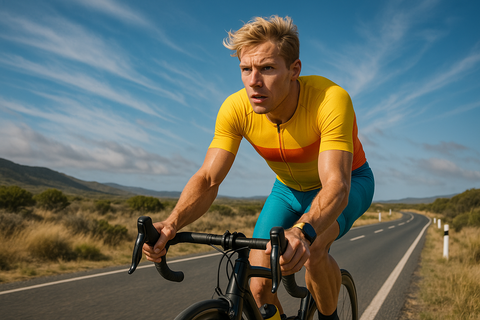
With the swim neutralized, Sanders wasted no time asserting his dominance on the bike. On the 90-kilometer course, he pushed a pace that only Germany's Leonard Arnold could match. Together, they distanced themselves from a chase group that included top names like Josh Lewis, Ben Kanute, Rudy von Berg, and Andrea Salvisberg.
By the time Sanders and Arnold reached T2 (the transition from cycling to running), they had built a nearly three-minute lead over the chasers. In a half-distance race, such a gap is formidable, especially with Sanders leading the charge.
Sanders' bike leg was a masterclass in power and strategy. Riding alongside Arnold, they effectively time-trialed away from the field, making it increasingly difficult for the chasers to close the gap. For athletes looking to improve their cycling performance, investing in quality equipment like a high-performance road bike can make a significant difference in race day results.
Run Dominance: Sealing the Victory
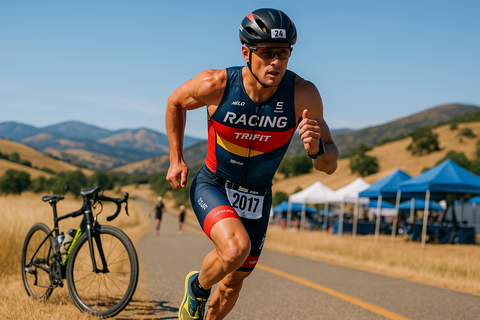
Any doubts about the outcome were quickly dispelled as Sanders hit the run course. Arnold, who had matched Sanders' bike effort, couldn't keep pace when Sanders shifted gears on the run. Sanders surged ahead, turning the race into a solo procession.
There was no dramatic comeback, no faltering in the final kilometers. Sanders ran with the confidence of an athlete who knows his capabilities and trusts them implicitly. The only question was the final time.
That time — 3:17:12 — was a comprehensive statement of his physical form. While the shortened swim complicates direct comparisons to standard 70.3 times, Sanders' bike and run performances left no doubt about his readiness for the 2026 season. For triathletes looking to optimize their run performance, proper electrolyte supplementation is crucial for maintaining energy levels during long-distance events.
Podium Battle: The Drama Behind Sanders
While Sanders cruised to victory, the race for the remaining podium spots was fiercely contested. Ben Kanute secured second place, finishing 2 minutes and 27 seconds behind Sanders. Known for his versatility, Kanute held off a hard-charging pack but never threatened the leader.
Swiss athlete Andrea Salvisberg claimed third, crossing the line 2 minutes and 33 seconds behind Sanders, just six seconds behind Kanute. Germany's Jannik Schaufler finished fourth, only 2 minutes and 41 seconds behind Sanders.
The tight margins between second and fourth underscore the depth of talent in the field. These athletes weren't having off days; they were racing at a high level. Sanders was simply operating on another plane.
Top four results
| Position | Athlete | Gap to Winner |
|---|---|---|
| 1st | Lionel Sanders (CAN) | 3:17:12 |
| 2nd | Ben Kanute (USA) | +2:27 |
| 3rd | Andrea Salvisberg (SUI) | +2:33 |
| 4th | Jannik Schaufler (GER) | +2:41 |
Strategic Insights: What This Victory Means
Sanders' Exceptional Early-Season Form
Opening the season with such dominance is significant. Athletes at Sanders' level often accept modest early-season results to peak later. That Sanders delivered this performance in March suggests a strong fitness base and targeted preparation for early-season sharpness. His approach to training methodology has evolved significantly in recent years.
Weather Modifications and Strategic Implications
The shortened swim didn't just benefit Sanders; it highlighted a broader truth about triathlon dynamics. Removing or reducing the swim changes which athletes can contend for victory. Sanders, a bike-run specialist, capitalized on this shift.
This raises questions for race organizers, competitors, and fans:
- For organizers: How should results from altered formats be weighted in rankings?
- For competitors: How vulnerable are swim-reliant strategies when conditions change?
- For fans: Context is key in understanding results from modified races.
A Signal for the Season Ahead
Sanders has been vocal about the sport's future, urging Ironman to evolve. With performances like this, he enters the season as both a competitor and an influential voice. If this is his final campaign, he's determined to make it count.
The key question is whether Sanders can replicate this dominance when the swim returns to its full distance. History suggests tougher competition from strong swimmers, but his bike and run form at Dallas showed he can overcome significant swim deficits. For athletes training for their own 2026 Ironman races, Sanders' performance offers valuable lessons in strategic race execution.
Key Takeaways
- Weather-shortened swim eliminated Sanders' biggest weakness, allowing his bike and run strengths to shine.
- Only Leonard Arnold could match Sanders on the bike, but he couldn't sustain the pace on the run.
- Sanders' winning margin of 2:27 over a quality field is commanding.
- The tight battle for positions 2–4 highlights the depth of talent in the field.
- Strong early-season form bodes well for Sanders' 2026 campaign.
Looking Ahead
Lionel Sanders has kicked off his 2026 season with a performance that silences doubters and energizes supporters. The weather may have shortened the swim, but nothing was shortened about his effort, execution, or the statement this result makes.
For rivals, the message is clear: when Sanders eliminates his swim deficit, the field has little room for error. For fans, Dallas–Little Elm was a reminder of why Sanders has been a compelling figure in triathlon for over a decade.
The 2026 season is just beginning. If this opening act is any indication, it's going to be one worth watching. Whether you're a professional athlete or an age-grouper preparing for your next race, having the right gear is essential. Consider upgrading your training setup with a GPS running watch to track your progress, or optimize your hydration strategy with quality magnesium supplements for better recovery and performance.
Find the perfect race day essentials at TriLaunchpad — your triathlon journey starts here. Shop all collections →