IRON40 Fundraiser: When Passion Meets Purpose on Campus
The Story Behind the Miles
Picture this: four consecutive days, four full Ironman triathlons, one extraordinary mission. That's exactly what unfolded during the IRON40 Fundraiser from March 17–20, 2025, when Dr. Matthew Weathers transformed the Bob Jones University campus into an arena of human endurance and community spirit.
Here's what many people don't realize about fundraising events: they often settle for bake sales and car washes. But what if I told you that one person's willingness to push beyond conventional limits could inspire an entire community to rally behind a $1 million goal? That's precisely what happened at 1700 Wade Hampton Blvd in Greenville, SC.
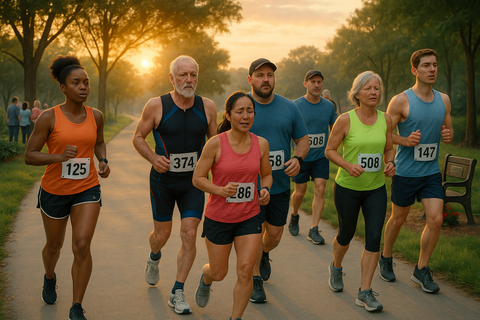
This wasn't your typical triathlon. While swim segments took place at carefully selected off-campus open water venues, the bike and run portions transformed the BJU campus into a living, breathing theater of possibility where spectators became participants and observers became believers.
- Daily swim: ~2.4 miles
- Daily bike: ~112 miles
- Daily run: ~26.2 miles
- Total distance: A staggering 562.4 miles across four days
What's fascinating here is that this wasn't about competition—it was about combining extreme personal endurance with community engagement for a cause that mattered. And spoiler alert: it worked. By May 2025, the event successfully raised $1 million for BJU student financial aid.
The Technical Reality (What You Need to Know)
The Course: Designed for Connection, Not Just Competition
Let me debunk a common misconception: not every endurance event needs to be a race with cutoff times and competitive fields. The IRON40 proved that accessibility and spectator engagement can be just as powerful as technical difficulty.
Here's how it worked:
Swim Segments:
- Conducted at undisclosed open water locations off-campus
- Conditions varied daily (because Mother Nature doesn't do rehearsals)
- Wetsuit decisions made based on real-time conditions
Bike & Run Segments:
- Loop-based courses specifically designed on the BJU campus
- Built for maximum spectator access and community participation
- No registration fees, no barriers—just open invitations to join
The real technical challenge? It wasn't the terrain or elevation. It was something far more demanding: cumulative fatigue from repeating a full-distance triathlon four days in a row. Think about that for a moment. Most athletes train months for one Ironman. Dr. Weathers did four consecutive ones.
For perspective on what constitutes good Ironman times, elite athletes complete a single full-distance race in under 8 hours, while age groupers typically finish between 12-15 hours. Completing four consecutive Ironman-distance triathlons requires an entirely different level of endurance strategy.
The Rules (Or Rather, the Freedom)
Here's what's refreshing: there were no complicated rule books or governing bodies dictating every detail. Dr. Weathers operated with a private support team handling nutrition, mechanical support, and medical aid—everything an ultra-endurance athlete needs when pushing human limits.
For community members who joined? Zero rules. Zero costs. Just show up and participate. This approach transformed a solo challenge into a community movement.
Behind the Scenes: Making the Impossible Possible
Daily Operations (The Organized Chaos)
I've learned something valuable from covering endurance events: the magic happens in the logistics. While specific start times remained private, the four-day rolling schedule from March 17-20 required meticulous coordination.
The campus loop courses remained open and spectator-friendly throughout. Imagine this: you're a BJU student, and between classes, you can hop on your bike and ride alongside someone attempting something most people wouldn't dream of. That's not just an event—that's an experience that changes perspectives.
The Collegian (BJU's student news organization) provided official live-stream coverage, meaning even those who couldn't be there physically could witness history in the making.
The Support System
Behind every extraordinary achievement is an extraordinary team. Dr. Weathers' dedicated support crew handled everything from nutrition timing (we're talking 10,000+ calories daily) to bike maintenance to medical monitoring.
Understanding what pro triathletes eat in a day gives insight into the massive caloric demands of ultra-endurance events. When you're burning 8,000-12,000 calories daily across four consecutive days, nutrition becomes as critical as the physical training itself.
For community participants, the approach was beautifully simple: no formal aid stations needed. This was about organic participation and genuine encouragement, not manufactured race experiences.
Reading the Elements
Mid-March in Greenville, SC, presents its own character. You're looking at:
- Average highs in the 60s (°F)—comfortable for some, chilly for others
- That moderate spring precipitation chance (because perfect weather would be too easy)
- Early spring variability typical of the Piedmont region
What many don't realize: environmental challenges in multi-day events compound exponentially. A slightly cool first day becomes a different beast by day four when your body's reserves are depleted.
The Preparation Paradox
Training for the Unthinkable
Here's a truth bomb about ultra-endurance preparation: training for one Ironman is dramatically different from training for four consecutive ones. This likely required years of progressive build-up focusing not just on performance, but on something most athletes overlook: recovery capacity.
The Greenville area offered perfect training grounds:
- The Swamp Rabbit Trail for cycling
- Foothills routes for elevation work
- Multiple open water venues for swim conditioning
If you're inspired to tackle your first Ironman-distance event, check out our guide on beginner-friendly Ironman races to start your journey with events designed for first-timers.
Strategy: The Art of Sustainable Suffering
Let me share something I've learned from studying elite endurance athletes: the winning strategy for multi-day events isn't about going hard—it's about going smart.
Dr. Weathers' approach centered on:
- Pacing for repetition over maximal effort
- Precision nutrition hitting that 10,000+ calorie daily target
- Electrolyte management that would make a chemist proud
- Recovery protocols treated with equal importance to the racing itself
Equipment considerations likely included multiple sets of bikes, shoes, and wetsuits—because when you're covering 562.4 miles, equipment wear becomes a real factor. For athletes looking to optimize their gear, investing in quality anti-fog swim goggles and reliable magnesium citrate supplements can make a significant difference in performance and recovery.
The Real Victory
Here's what matters most: while there were no competitive results to publish or awards ceremonies to attend, the event achieved something far more meaningful.
By May 2025, the IRON40 raised $1 million for student financial aid.
Read that again. One person's willingness to push beyond normal limits, combined with a community's willingness to support that vision, created life-changing opportunities for BJU students.
The legacy? It's not just about the money raised. It's about:
- Strengthened community-university bonds
- A powerful case study in mission-driven endurance fundraising
- Proof that combining personal challenge with collective purpose creates something greater than the sum of its parts
For more inspiring stories of athletes using triathlon for greater purposes, explore our coverage of endurance athletes pushing limits for meaningful causes.
What You Should Know
Important clarifications for future reference:
- This wasn't a traditional race. The IRON40 was a fundraising activity and solo endurance challenge—not a competitive event with open registration. If you're searching for that experience, you'll need to look elsewhere.
- Limited public data exists on specific swim locations, exact course maps, and daily split times. This was a private challenge with public participation opportunities, not a sanctioned race with published technical specifications.
- Future occurrences remain unknown. Will there be another IRON40? Check official BJU communications for updates.
- For traditional triathletes: If you're seeking competitive triathlon experiences in the Greenville area, consult regional race calendars and local clubs. Our comprehensive triathlons near me directory can help you discover events across the United States.
Official information: iron40.bju.edu
Your Home Base: Where to Stay for BJU Campus Events
While the IRON40 Fundraiser has concluded (March 2025), these recommendations apply perfectly for future BJU events, alumni gatherings, or Greenville-area triathlon training. Here's what I've learned matters most: proximity to campus loops, athlete-friendly amenities, and reliable early-morning services.
The Top Three (Tested and Athlete-Approved)
1. Hampton Inn & Suites Greenville Haywood Mall
My Top Pick for Serious Athletes
Why it's exceptional: At just 1.2 miles from campus, this is as close as you'll get without sleeping in a dorm room. But here's what really matters—they understand
The IRON40 Fundraiser was a four-day endurance event held from March 17–20, 2025, at Bob Jones University campus. Dr. Matthew Weathers completed four consecutive Ironman triathlons to raise $1 million for student financial aid. The event aimed to combine personal endurance with community participation and engagement. The IRON40 involved four consecutive Ironman triathlons over four days. Each day included a 2.4-mile swim, a 112-mile bike ride, and a 26.2-mile run, amounting to a total distance of 562.4 miles. The swimming segments of the IRON40 were conducted at undisclosed open water locations off-campus. These venues were selected to focus on safety and the natural conditions varied daily. The community was invited to join the event without any costs or formal registration. Spectators were encouraged to engage, and many participated in biking and running alongside Dr. Weathers on the loop-based courses designed on the BJU campus. The main objective of the IRON40 Fundraiser was to raise $1 million for Bob Jones University student financial aid, while showcasing the power of combining personal endurance challenges with community engagement for a meaningful cause. The primary challenge was the cumulative fatigue from completing a full-distance triathlon over four consecutive days. Managing nutrition, hydration, equipment maintenance, and recovery were essential components of overcoming this challenge.What is the IRON40 Fundraiser?
What distances were covered during the IRON40 Fundraiser?
Where did the IRON40 swim segment take place?
How did the community participate in the IRON40 Fundraiser?
What was the primary goal of the IRON40 Fundraiser?
What were the main challenges faced during the IRON40 event?
Discover unique triathlon-themed merchandise, including stylish t-shirts, stickers, phone cases, and home decor - perfect for endurance sports enthusiasts and athletes. Shop now
Find the perfect race day essentials at TriLaunchpad — your triathlon journey starts here. Shop all collections →