From Olympic Dreams to Triathlon Success: How Elite Runner Rob Watson Found His Second Act
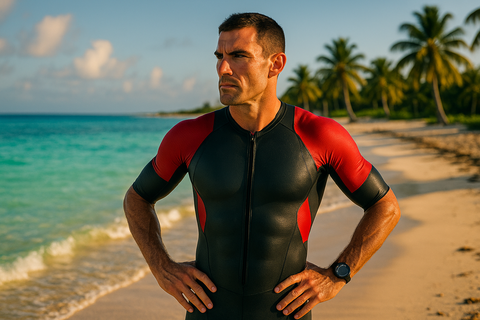
At 42, when most elite athletes have long retired, Rob Watson is just getting started in his new sport—triathlon. Recently qualifying for the 70.3 World Championships, Watson's journey from Olympic marathon hopeful to age-group triathlon champion illustrates how athletic passion can evolve and thrive over time.
Transitioning from a professional athletic career is notoriously challenging. Many former athletes struggle to find purpose post-retirement, with studies indicating up to 30% experience significant depression. Watson's story, however, offers a different narrative—one where reinvention is about discovering new possibilities rather than replacing what was lost.
For endurance athletes contemplating their next chapter, or anyone considering a significant sport transition later in life, Watson's journey proves that competitive fire doesn't have an expiration date. His credentials are impressive: Canadian national champion, World Championship representative, and a 2:13 marathon personal best. Now, his insights into triathlon transition are invaluable for those seeking their own athletic renaissance.
The Making of a Champion: Early Running Foundation
From 7-Year-Old Speedster to NCAA Scholarship
Watson's athletic journey began early. Growing up in a running family in London, Ontario, his first competitive race was at age seven during the Forest City Road Race 10km. His debut time of 59 minutes might not sound remarkable until you consider the improvement that followed.
"The next year, as an 8-year-old, I knocked 10 minutes off my time to go 49min," Watson recalls. This dramatic improvement foreshadowed a career built on relentless progress and competitive drive that sustained him through decades of elite competition.
Running became more than a sport for Watson—it was a formative part of his identity during his teenage years. "Throughout my awkward teenage years, running was an anchor that allowed me to form a sense of identity and gain confidence – being the fastest kid around carried a bit of clout." This connection between athletic achievement and self-worth would become both his greatest asset and biggest challenge in later transitions.
His talent earned him a track and field scholarship to Colorado State University, where he spent "four of the most wonderful and transformative years" competing in the NCAA system. The scholarship was particularly meaningful for Watson, who admits, "I wasn't much of a student, but running provided me the opportunity to earn a degree."
Key Insight: Early athletic success often creates deep identity connections that can make later transitions challenging but also provide the confidence foundation necessary for reinvention.
Professional Running Career Highlights and Challenges
Steeplechase to Marathon: Chasing Olympic Dreams
Watson's professional career began in the steeplechase—what he calls "the weird cousin event adjacent to the more 'normal' 5000m and 1500m." This technical event, featuring barriers and water jumps, suited his speed and tactical awareness. His dedication paid off with back-to-back Canadian championships in 2008 and 2009, plus qualification for the 2009 World Track and Field Championships in Berlin.
But Watson's biggest career pivot came when he transitioned from track to roads, setting his sights on the marathon. "I had never really planned on being a marathoner, but to be fair I never really planned on much. I was more of a ride the wave type guy and trusted my gut and heart to help set the direction."
His marathon debut at the 2011 Houston Marathon provided a harsh introduction to the 26.2-mile distance. Despite targeting a 2:11 finish, he ran 2:16 and placed fourth. "I thought I was going to go 2:11, but the combination of naive optimism and lack of experience saw me lose a good 5 minutes over the last 10km of the race," he reflects. "It was a VERY painful last 10km—welcome to the marathon, kid."
Rather than discourage him, the brutal experience ignited something deeper. "The marathon may have destroyed my legs, but it filled my soul and gave new life to my running. There was no going back."
- 2012: Relocated to Vancouver, lowered PB to 2:13:37
- 2013: His career-defining year with four marathons including 11th at Boston, Canadian Championship in Ottawa, 20th at World Championships in Moscow, and a new PB of 2:13:29 with 6th place at Toronto Waterfront
- Multiple national team selections and race victories
The Peak and the Decline
2013 represented the pinnacle of Watson's career, but also highlighted the cruel reality of elite athletics. "I continued to push on, I made more national teams, I won more races, but for whatever reason I was never able to quite find the magic again."
Three Olympic qualification attempts ended in disappointment. After a 2:18 finish at the 2016 London Marathon failed to secure his Olympic dream, Watson made the difficult decision that many elite athletes face: "I was mentally and physically exhausted and made the decision to hang up my racing flats."
The Retirement Crossroads
When Elite Dreams End: Finding Purpose Beyond Competition
Watson's retirement decision reflects a common challenge among elite athletes—knowing when to step away while maintaining connection to their sport. His approach proved prescient: rather than walking away completely, he continued running because "I am a runner, and that is what I have always done, and that is what I will always do."
This philosophy paid off with an unexpected victory at the 2018 Vancouver Marathon, "which was a nice post-retirement treat." The win demonstrated that competitive ability doesn't disappear overnight, even when the motivation and training structure change.
Watson channeled his experience into coaching, becoming co-owner and head coach of Mile2Marathon Vancouver. "I am proud of the community we have built and the athletes that have come through our group," he says. "We have helped guide countless runners to PBs and BQs, while making lifelong memories and friendships along the way."
Building Community Through Coaching
The transition to coaching provided Watson with purpose beyond personal achievement. Working with recreational and competitive athletes offered a different type of fulfillment—one focused on enabling others' success rather than chasing personal glory. This community-building experience would prove crucial preparation for his eventual triathlon transition.
However, the competitive itch remained. Watson's identity as a competitor couldn't be satisfied entirely through coaching others. He needed his own athletic challenges, leading to experimentation with various endurance disciplines.
Sport Sampling and the Search for New Challenges
Trail Running, Ultra Distance, and Bike Racing: The Quest for Competitive Fire
Elite athletes rarely transition cleanly from competition to retirement. Most experience what sports psychologists call "career termination stress"—the challenge of replacing the structure, identity, and competitive fulfillment that defined their lives for decades.
Watson's post-marathon sampling phase included several attempts to reignite his competitive passion:
- Trail racing: "Too technical" for his road-running background
- Ultra running: "Too boring" despite his endurance base
- Bike racing: "Too scary" given the crash risks
Each experiment taught valuable lessons about what motivates elite athletes. Technical skills can be learned, but fundamental enjoyment and natural aptitude matter enormously. The ultra running experience was particularly telling—despite having the aerobic base for success, Watson found the lack of speed and tactics unsatisfying.
During this period, Watson's "competitive drive and desire to smash myself for a cause" remained dormant. This language reveals something crucial about elite athlete psychology: the need for meaningful suffering in pursuit of excellence. Recreational fitness, no matter how intense, couldn't replace the specific satisfaction of competition preparation and race-day execution.
This phase lasted several years, suggesting that finding the right post-career athletic outlet requires patience and experimentation. Many former elite athletes give up during this period, assuming their competitive days are finished. Watson's persistence proved crucial.
Triathlon Discovery and Renaissance
Three Sports, One Passion: Finding Home in Triathlon
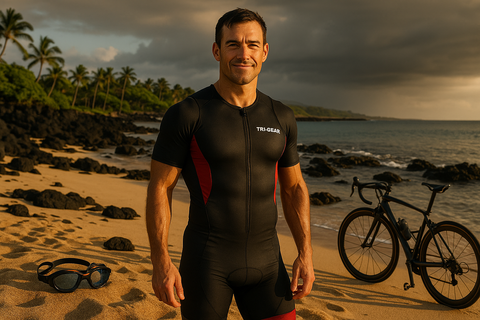
Watson's triathlon journey began in 2023 when friends convinced him to attempt the Ironman 70.3 in Indian Wells, California. His first experience perfectly captured the beginner's struggle: "My swim was a strugglefest, I vastly overcooked the bike, and I finished it off by running the slowest and most painful half marathon of my life—but boy did I ever enjoy the experience."
That enjoyment despite poor performance signals something crucial about sport transitions. Watson had found an activity that engaged the same competitive drive that fueled his running career, but with enough technical challenge and novelty to reignite his motivation.
The Learning Curve and Breakthrough
Triathlon's three-discipline format provided exactly what Watson's competitive spirit needed: complexity, technical skill development, and the opportunity to leverage his endurance base while learning entirely new skills. The sport demanded the same obsessive attention to detail that characterized his marathon training, but with fresh challenges in swimming and cycling.
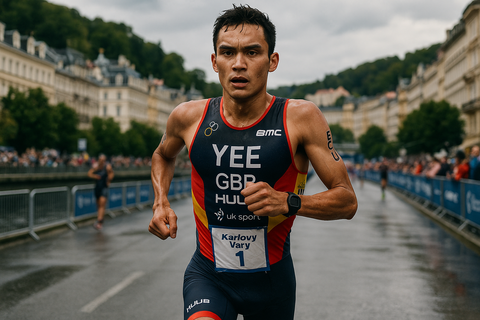
His recent breakthrough at Santa Cruz 70.3 demonstrated dramatic improvement: a 4:24:20 finish earned him 2nd place in his age group and qualification for the 70.3 World Championships in Nice, France. More importantly, it proved that elite athletic ability can transfer successfully between endurance disciplines, even with age-related changes.
For those looking to improve their swim performance, investing in quality equipment like anti-fog, UV-protected swim goggles can make a significant difference in training consistency and race-day confidence.
Community and Culture
Perhaps most significantly, Watson discovered that "triathlon has a vibrant, inviting, and supportive community. I feel truly at home here." This community aspect cannot be overstated—elite athletes often struggle with the isolation that comes from being exceptional. Finding a new tribe that appreciates both his experience and beginner status provided emotional fulfillment beyond competition results.
World Championship Preparation
Watson approaches his World Championship opportunity with realistic confidence: "My goal is the podium, but whatever the outcome I'm sure I'll add another chapter or two to this endurance life that I live." This balanced perspective—ambitious but not attached to outcomes—reflects hard-won wisdom from decades of elite competition.
Lessons for Athletic Transitions
The Blueprint: How to Successfully Reinvent Your Athletic Identity
Watson's journey offers several crucial insights for anyone considering a significant sport transition:
- Maintain Your Aerobic Base: Elite endurance athletes possess a decades-built aerobic capacity that transfers between disciplines. Watson's running fitness provided the foundation for triathlon success, even as he developed cycling and swimming skills from scratch.
- Embrace the Beginner's Mindset: Former elite athletes often struggle with being beginners again. Watson's willingness to accept "strugglefest" swims and overcooked bike splits allowed him to focus on improvement rather than ego protection.
- Find Your Tribe: The community aspect proved as important as the competitive opportunity. Watson needed a group that valued both his experience and his beginner status.
- Set Stretch Goals with Realistic Timelines: Qualifying for World Championships within two years demonstrates appropriately ambitious goal-setting.
- Focus on Process Over Outcomes: Watson's enjoyment despite poor initial performance shows the importance of finding intrinsic motivation in the new sport.
- Leverage Transferable Skills: Watson's tactical awareness, training discipline, and race execution experience transferred directly to triathlon.
Common Transition Mistakes to Avoid
- Expecting immediate success based on past achievements
- Avoiding activities where you're not immediately good
- Training alone instead of joining beginner-friendly communities
- Comparing current performance to peak past performance
- Choosing sports based solely on existing strengths rather than genuine interest
The Science of Sport Transitions
Watson's successful transition aligns with research on athletic career development. Studies show that athletes with diverse early sport experiences adapt more easily to new disciplines later in life. Watson's background in track, road racing, and various endurance experiments provided the sport sampling foundation that made triathlon transition possible.
Physiological Advantages
Elite endurance athletes possess several advantages for sport transitions:
- Established aerobic capacity that maintains well into masters age groups
- Developed proprioception and body awareness that accelerates skill acquisition
- Proven ability to handle training stress and recovery protocols
- Mental toughness and pain tolerance developed through years of elite training
Supporting recovery and performance with proper nutrition is essential. Consider supplementing with electrolyte supplements containing magnesium and potassium to maintain optimal hydration and muscle function during intense training blocks.
Psychological Challenges
However, psychological barriers often outweigh physical advantages:
- Fixed mindset developed through years of specialization
- Fear of failure in public after elite success
- Identity crisis when athletic identity becomes threatened
- Perfectionism that makes beginner-level performance emotionally difficult
Watson's success stemmed largely from navigating these psychological challenges effectively.
Looking Forward: The Next Chapter
Watson's World Championship qualification represents more than personal achievement—it demonstrates that athletic careers can have multiple peaks across different sports. His goal of podium contention at age 42 in a new sport challenges conventional wisdom about aging and specialization.
Broader Implications
Watson's story arrives at a time when masters athletics participation is exploding. According to USA Triathlon, athletes over 40 represent the fastest-growing demographic in the sport. His transition provides a roadmap for others seeking athletic reinvention.
Future Possibilities
With World Championships ahead and continued improvement likely, Watson's triathlon journey may be just beginning. His coaching background and competition experience position him uniquely to help other elite athletes navigate similar transitions.
Key Takeaways for Your Own Athletic Evolution
Whether you're a former competitive athlete seeking new challenges or a recreational athlete considering a sport change, Watson's blueprint offers actionable guidance:
For Former Elite Athletes
- Your fitness foundation is more valuable than you think
- Expect a significant learning curve in technical skills
- Find communities that value growth over immediate performance
- Set ambitious but realistic timeline expectations
- Focus on intrinsic enjoyment alongside competitive goals
For Recreational Athletes
- Sport transitions become easier with age and experience
- Technical skills can be learned at any age with proper instruction
- Community support accelerates both learning and enjoyment
- Previous athletic experience provides transferable mental skills
- Age group competition offers meaningful goal structures
For Anyone Considering Change
- Athletic identity can evolve and expand rather than diminish
- Competitive drive doesn't have expiration dates
- New sports offer fresh communities and perspectives
- Experience transfers between related disciplines
- The best time to start is now, regardless of age
Find the perfect triathlon gear at TriLaunchpad — your triathlon journey starts here. Shop all collections →