Freezing, Exhausted, But Unstoppable: Inside Spencer Matthews' Brutal Antarctica Triathlon Battle
A deep look at Project Se7en, the Antarctic iron-distance triathlon, and lessons in preparation and mental resilience.
Imagine cycling through the relentless blizzards of Antarctica for nearly 19 hours, your body fighting against the biting cold with every pedal stroke, while sleep deprivation gnaws at your resolve. This isn't a scene from a nightmare—it's the reality Spencer Matthews faced during his extraordinary Project Se7en challenge. His mission? To complete seven iron-distance triathlons across seven continents in record time, all for a noble cause.
Spencer Matthews, once known as a reality TV star from "Made In Chelsea," has redefined himself as an endurance athlete and extreme sports pioneer. His recent attempt at an Antarctic triathlon highlights the immense mental and physical resilience required to push human limits in one of the world's harshest environments.
The Challenge: Project Se7en Explained
Project Se7en is one of the most ambitious endurance challenges ever conceived. Matthews aimed to complete seven full iron-distance triathlons (3.8km swim, 180.2km bike, 42.2km run) across seven continents, all within a compressed timeframe that would test the absolute limits of human endurance.
This challenge transcends personal achievement. Matthews is raising funds for St James' Place, a men's suicide prevention charity—a cause that adds profound meaning to every grueling mile. The combination of extreme physical challenge and charitable mission creates a powerful narrative that transforms individual suffering into collective hope.
The Complete Challenge Timeline:
- Total Duration: 21 days, 9 hours, and 18 minutes
- Format: Seven iron-distance triathlons
- Locations: Seven continents (Antarctica being the most extreme)
- Purpose: Fundraising for men's mental health awareness
This isn't just about athletic prowess—it's about demonstrating that when we have a purpose larger than ourselves, we can endure seemingly impossible hardships.
Antarctica: The Ultimate Triathlon Test
Attempting an iron-distance triathlon in Antarctica elevates the difficulty to an almost incomprehensible level. The continent represents the ultimate test of human endurance, where every element—temperature, terrain, and isolation—conspires against success.
Why Antarctica Is Different:
- Extreme temperatures that can drop well below freezing
- Unpredictable weather patterns including sudden blizzards
- Specialized equipment requirements for every aspect of the race
- Complete isolation with no possibility of external support
- Unique terrain challenges that standard triathlon gear cannot handle
The previous record holder, Anders Hofman, completed the first Antarctic iron-distance triathlon in 72 hours, 54 minutes, and 9 seconds. However, challenging conditions forced his crew to shelter in tents for 27 hours during a 150 km/h blizzard, significantly extending his total time. Matthews' attempt would test whether improved planning and conditions could dramatically reduce this benchmark.
The Swim: 3.8km in Sub-Zero Waters
Before even reaching the cycling nightmare that would define his Antarctica experience, Matthews had already conquered what many consider the most dangerous portion of the challenge—swimming 3.8 kilometers in sub-zero Antarctic waters.
The swim segment required specialized equipment far removed from standard triathlon gear. Matthews wore a thick wetsuit with a neoprene hood, essential protection against water temperatures that could quickly lead to hypothermia. For those training in cold water conditions, investing in quality anti-fog swim goggles is crucial for maintaining visibility in challenging conditions. The photos he shared post-swim revealed the toll: prominent goggle marks, a frozen expression, and the unmistakable look of someone who had just battled nature's most extreme conditions.
His immediate reaction spoke volumes: "I'll never put myself in that position again." This wasn't hyperbole—swimming in Antarctic waters represents a level of physical stress that pushes the human body to its absolute limits.
Critical Safety Considerations for Polar Swimming:
- Specialized thermal protection including reinforced wetsuits
- Immediate warming protocols post-swim
- Constant medical monitoring for hypothermia signs
- Emergency extraction plans for weather deterioration
- Limited time windows based on conditions
The psychological challenge of entering sub-zero water cannot be understated. It requires overriding every survival instinct your body possesses while maintaining the technique and endurance necessary to complete nearly 4 kilometers of swimming. Learn more about essential swimming recovery products that help athletes recover from intense swim sessions.
The Bike: 18 Hours 50 Minutes of Brutal Endurance
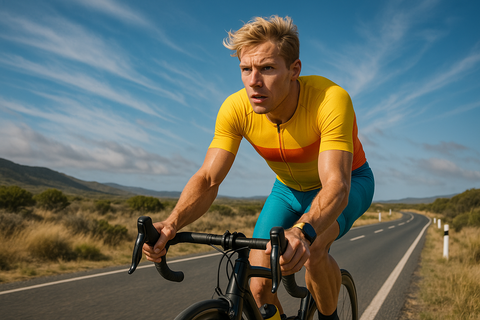
If the swim was brutal, the cycling segment would prove to be the ultimate test of Matthews' mental and physical resilience. Clocking in at 18 hours and 50 minutes, this wasn't just the longest segment of his Antarctica triathlon—it became the longest single activity of his entire Project Se7en challenge.
Matthews' own description captures the reality: "Freezing, rough, slow, painful." These four words encapsulate nearly 19 hours of suffering that most people cannot comprehend. This wasn't cycling as triathletes know it—there were no aerodynamic race bikes, no smooth tarmac, no controlled conditions.
Instead, Matthews rode a bike specifically designed for snow and ice conditions, dressed in extreme weather gear that prioritized survival over performance. The terrain was unforgiving, the weather unpredictable, and the isolation complete. For endurance athletes preparing for extreme conditions, proper magnesium supplementation can help prevent cramping during extended efforts.
The Mental Challenge:
The most telling detail from Matthews' account wasn't about the physical conditions—it was about the mental battle. "Towards the end I was literally falling asleep riding," he revealed. This highlights perhaps the most dangerous aspect of ultra-endurance events: the point where exhaustion compromises safety and decision-making.
Fighting sleep deprivation while navigating Antarctic terrain represents a psychological challenge that extends far beyond typical endurance sports. It requires constant mental vigilance when your body is screaming for rest, all while maintaining the physical coordination necessary to continue cycling safely. Athletes can learn from modern training approaches that help build mental resilience.
Equipment Adaptations:
- Snow/ice-specific tires for traction
- Extreme weather clothing prioritizing warmth over aerodynamics
- Navigation equipment for polar conditions
- Emergency shelter capabilities for sudden weather changes
- Extended nutrition storage for 19+ hour efforts
Mental Resilience in Extreme Conditions
Matthews' Antarctica experience provides a masterclass in mental resilience under extreme conditions. The ability to continue for nearly 19 hours while "freezing, rough, slow, painful" demonstrates psychological strategies that extend far beyond normal athletic training.
The Role of Purpose:
What kept Matthews going when every fiber of his being wanted to stop? The answer lies in his mission. Raising funds for St James' Place—a charity focused on preventing male suicide—provided a purpose larger than personal achievement. This external motivation becomes crucial when internal motivation fails.
Managing Sleep Deprivation:
The admission that he was "literally falling asleep riding" reveals a critical challenge in ultra-endurance events. Managing microsleep episodes while maintaining safety requires:
- Constant movement to maintain alertness
- Structured nutrition to stabilize energy levels—consider electrolyte supplements for sustained energy
- Mental checkpoints to assess cognitive function
- Safety protocols for critical decision-making moments
Embracing Discomfort:
Matthews' ability to continue despite describing the experience as "painful" demonstrates a fundamental shift in relationship with discomfort. Rather than seeing pain as a signal to stop, ultra-endurance athletes learn to accept it as a constant companion while maintaining forward progress. Discover 7 game-changing drills that can help build this mental toughness.
The Completion: Breaking Records and Barriers
Following the marathon run segment, Matthews successfully completed his Antarctica triathlon, breaking not one but two world records in the process. His total time for Project Se7en—21 days, 9 hours, and 18 minutes—represented an unprecedented achievement in multi-continent endurance challenges.
More importantly, his completion demonstrated that with proper preparation, unwavering mental resilience, and a purpose larger than personal achievement, humans can accomplish seemingly impossible feats even in Earth's most extreme environments.
Key Takeaways: Lessons from the Ice
Matthews' Antarctica triathlon experience offers valuable insights for anyone facing their own extreme challenges:
-
Purpose Fuels Endurance
When physical and mental resources are exhausted, having a mission larger than yourself can provide the motivation to continue. Matthews' charity focus transformed personal suffering into meaningful action. -
Preparation Is Everything
Success in extreme conditions requires specialized equipment, detailed planning, and understanding that normal rules don't apply. Standard triathlon gear would have been useless in Antarctic conditions. Explore top triathlon bikes and equipment for your own challenges. -
Mental Resilience Is Trainable
The ability to continue when "literally falling asleep" while cycling demonstrates that mental toughness can be developed through progressive exposure to challenging conditions. Check out triathlon time limits to understand pacing strategies. -
Accept Discomfort as Normal
Rather than fighting against difficult conditions, Matthews accepted "freezing, rough, slow, painful" as the reality of his situation while maintaining forward progress. -
Break Impossible into Possible
By completing seven iron-distance triathlons across seven continents, Matthews demonstrated that seemingly impossible challenges become achievable when broken into manageable segments. Learn about beginner-friendly ironman races to start your own journey.
The Broader Impact
Matthews' Project Se7en challenge extends far beyond personal achievement. By raising funds and awareness for men's suicide prevention, he's transformed extreme endurance sport into a platform for social change. His willingness to endure nearly 19 hours of brutal cycling in Antarctic conditions sends a powerful message about resilience, hope, and the importance of mental health support.
The visual documentation of his struggle—arriving "tired and muddy yet victorious"—provides authentic inspiration for anyone facing their own challenges. This isn't polished marketing content; it's raw human determination documented in real-time.
What's Next?
For those inspired by Matthews' achievement, the question becomes: what's your Antarctica? Whether it's completing your first triathlon, tackling a challenging life transition, or supporting a cause you care about, the principles demonstrated in Antarctic conditions apply to any significant challenge.
Consider how you might:
Matthews' journey from reality TV to extreme endurance athlete proves that transformation is possible for anyone willing to embrace extraordinary challenges. His Antarctica triathlon stands as a testament to human potential when purpose, preparation, and persistence align.
Support the Mission: Learn more about supporting St James' Place and men's mental health initiatives. Consider your own endurance challenge goals and how they might serve a greater purpose than personal achievement. Whether you're training for your first extreme triathlon or simply looking to push your limits, remember that every journey begins with a single step—or in Matthews' case, a single stroke in freezing Antarctic waters.
Find the perfect cycling gear at TriLaunchpad — your triathlon journey starts here. Shop all collections →