
Your First Triathlon: 13 Essential Tips for a Successful Race Day
You've dedicated months to training, your gear is set, but as race day looms, those butterflies in your stomach are gearing up for their own triathlon. Sound familiar? You're not alone. Every first-time triathlete experiences that unique mix of excitement and nerves that comes with tackling three disciplines in one event.
The good news? With the right preparation and mindset, your first triathlon can be an exhilarating experience that sparks a lifelong passion for the sport. Drawing from seasoned triathletes and initiatives like CLASH Endurance's "Zero to Tri," we've compiled 13 essential, field-tested strategies to transform your first race from overwhelming to enjoyable.
These aren't just theoretical tips—they're practical insights addressing real challenges beginners face on race day. From equipment preparation to mental strategies, you'll learn how to set yourself up for success and truly enjoy crossing that finish line.
Set Yourself Up for Success: Essential Equipment Preparation
1. Prepare Your Bike Properly
"A clean bike is a fast bike"—a mantra worth remembering. If you've done the hard training, don't let equipment failure hold you back. Start your bike prep well before race day. Clean and wash your bike thoroughly, or better yet, have it professionally serviced. A well-maintained bike shifts smoother, runs quieter, and boosts your confidence.
Test everything 1-2 days before the event. Ensure smooth gear shifting, check brakes, spin wheels, and listen for unusual sounds. Before bike check-in, do a final wipe-down, lube the chain, pump tires to proper pressure, and rack your bike in the gear you'll need when rolling out of transition.
On race morning, bring a cloth to wipe down your bike if left overnight. Recheck tire pressure (temperature changes can affect it), and ensure your bike is properly racked with handlebars facing outward for easy access. If you're looking to upgrade your ride, check out our Mobula Shimano 21V road bike for reliable performance.
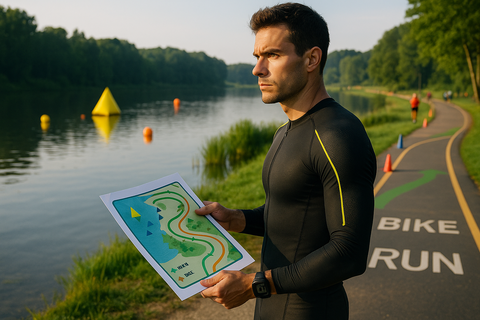
2. Know Before You Go: Course Reconnaissance Strategies
Course knowledge provides both confidence and competitive advantage. Familiarity with the course helps relax nerves and gives you a significant edge on race day.
- Swim the course during practice to identify sighting landmarks.
- Drive or ride the bike route to understand turns, hills, and road conditions.
- Practice beach run-ins if it's an ocean swim.
- Walk through the transition area to understand entry and exit flows.
Ensure you understand the transition layout completely. Don't rely on following others for directions—lock this knowledge in your memory to execute on autopilot during the race. For more detailed guidance on improving your triathlon performance through specific drills, check out our comprehensive training guide.
Master Your Transitions: Setup and Navigation Tips
3. Create Landmarks in Transition
Finding your bike quickly can make or break your transition times. Identify distinctive landmarks before the race starts. Choose objects easily spotted while running into transition—distinctive trees, poles, unique ground markings, or building features. Avoid using other athletes' gear as landmarks since they might move or change their setup.
Pay attention to your rack number or label. Most transition areas use numbered or lettered systems, providing a backup navigation method.
4. Pack Extra Shoes
You'll leave your running shoes in transition, so you'll need another pair for walking around, warming up, and getting to the start line. Plan ahead by designating someone to hold your extra shoes before the race starts, or identify a safe spot to leave them. Nothing ruins pre-race prep like walking barefoot on pavement or rocky ground.
5. Avoid the Transition Bag Knot Trap
It's tempting to tie knots in your transition bags, especially if left overnight and weather is a concern. But here's a race day disaster waiting to happen: hang a knotted bag on the rack, and that knot will only get tighter during an adrenaline-fueled transition.
If worried about rain, use a double-bag system. Put your shoes and gear in an additional plastic bag inside your main transition bag. This provides weather protection without creating the knot nightmare.
Swimming Success: Vision and Comfort Optimization
6. Choose the Right Goggles for Conditions
Seeing during the swim is half the battle. With elbows flying and waves everywhere, navigation is challenging enough—don't make it harder by wearing the wrong goggles for the conditions.
Check the weather forecast for your swim time and choose accordingly:
- Starting in darkness: Clear lenses provide maximum light transmission.
- Sunrise or bright conditions: Mirrored or dark-tinted lenses reduce glare.
- Overcast or rainy: Colored lenses can brighten your vision.
- Uncertain conditions: Light-tinted mirror lenses work as an excellent all-around choice.
Bring multiple pairs and make a last-minute decision based on actual conditions. For high-quality options, explore our selection of adjustable UV400 swim goggles designed for triathlon racing. You can also read our detailed guide on choosing the best triathlon swim goggles for 2024.
7. Double-Cap for Security
Eliminate any chance of your goggles falling off by using the double-capping technique. Put on one swim cap first, then your goggles, then the race-provided cap over everything. This sandwiches your goggles with protection, ensuring they stay put no matter how chaotic the swim becomes.
Stay Comfortable: Preventing Chafing and Sun Damage
8. Sunscreen and Vaseline Strategy
Avoid chafing and sunburn—it's neither fun nor a good look. Even if starting in darkness or entering the water immediately, apply sunscreen before the race. A water-resistant sport sunscreen provides protection throughout the event.
Use Vaseline strategically to prevent chafing in high-friction areas like around your wetsuit neckline and under your timing chip band. A little prevention goes a long way toward race day comfort.
9. Embrace Elastic Laces
Elastic laces are a no-brainer investment. They eliminate the need to tie shoes during transitions, challenging when hands are cold and shaking from adrenaline.
Practice with them beforehand to get the tension right. Too loose and your shoes feel sloppy; too tight and they'll restrict circulation. Once properly adjusted, they'll save you valuable time in both transitions.
10. The Underwear Rule
Yes, we still need to mention this: Do not wear underwear underneath your trisuit or cycling bibs. These garments are designed to be worn without underwear, and that's how everyone else wears them too.
Wearing underwear will make you uncomfortable, lead to chafing, and create a sweaty, unpleasant mess. Trust the design and go without—it might feel strange the first time, but it's the right way to do it. If you need a quality trisuit, consider our men's competition trisuit designed for maximum comfort.
Fuel Your Success: Simple Nutrition Planning
11. Develop a Basic Nutrition Plan
You don't need a Norwegian-level detailed nutrition strategy for your first races, but you absolutely need some kind of plan. Think through what you'll eat, how you'll carry it, how you'll use aid stations, and what you'll do if you drop or miss something.
Your plan can be beautifully simple: "Eat breakfast, put a bottle on the bike, take something at every aid station, and have a beer after." The key is having thought it through rather than making it up as you go.
Consider what happens if your nutrition bottle falls off your bike or you miss an aid station. Having a backup plan reduces race day stress and keeps you fueled properly. For optimal hydration support, check out our Hidra2Go electrolyte powder packets for easy race-day fueling.
The Golden Rules for Race Day Success
12. Nothing New on Race Day
This is the most important rule in triathlon: nothing new on race day. No bike setup changes, no fancy new kit, no experimental nutrition, no attempting skills you haven't practiced, and no changing your plan because someone else is doing something different.
Trust what you know and what you've practiced. If you see something interesting that another athlete is doing, note it for future reference and test it in training before your next race. Last-minute changes might go well, but if they go wrong, everything you've worked for can be compromised.
For those planning their first sprint distance race, our 8-week sprint triathlon training plan provides structured preparation to build confidence.
13. The Real Golden Rule: Have Fun
It might sound clichéd, but having fun is genuinely the most important thing on race day. Triathlon has developed a culture of grit and grinding, but you most likely started this sport because you enjoyed it—keep that spirit alive during your race.
Time splits and power outputs might seem critical in the moment, but here's what you'll actually remember: the effort you gave, the people you met, and the fun you had. Those memories are exactly what will motivate you to sign up for your next race.
Don't get so caught up in performance metrics that you forget to smile, encourage fellow athletes, and soak in the incredible experience of completing a triathlon.
Your Path to Triathlon Success
Your first triathlon represents the beginning of an incredible journey. These 13 tips aren't just about getting through race day—they're about building the foundation for a lifetime of triathlon adventures. Every experienced triathlete was once exactly where you are now, feeling those same butterflies and wondering if they're truly ready.
Remember that preparation builds confidence, small details make big differences, and fun should always be your primary goal. Your first race is about proving to yourself that you can do it and discovering the amazing triathlon community along the way.
Take action on these tips:
- Create your race day equipment checklist.
- Schedule time for course reconnaissance.
- Practice your transition setup.
- Develop your simple nutrition plan.
- Embrace the beginner mindset and focus on enjoyment.
The triathlon community is incredibly welcoming to newcomers, and there's something magical about crossing that first finish line. Trust your training, follow these guidelines, and get ready for one of the most rewarding experiences in endurance sports.
For those wondering about race distances and what to expect, learn more about triathlon time limits from sprint to Ironman to help set realistic expectations. And if you're curious about performance benchmarks, check out our guide on what constitutes a good Ironman 70.3 time.
What questions do you have about your first triathlon? The community is here to help, and remember—we've all been beginners too.
Find the perfect race day essentials at TriLaunchpad — your triathlon journey starts here. Shop all collections →