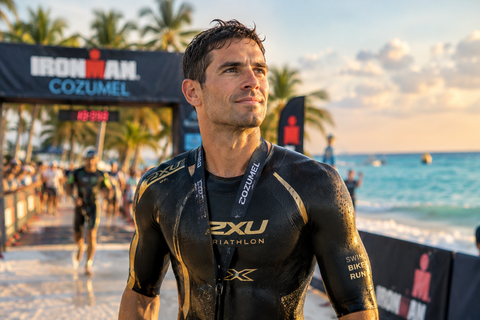
El coste oculto de la fama en redes sociales en deportes de competición: Descalificación de Matt Choi en el Ironman 70.3
Resumen
En el mundo de los triatlones, donde se celebra la garra y la disciplina, la historia de Matt Choi sirve como una advertencia. Choi, un influencer de redes sociales con casi medio millón de seguidores, fue descalificado recientemente del Ironman 70.3 en Galveston, Texas. Su trayectoria resalta la creciente tensión entre las exigencias de la creación de contenido para redes sociales y los estándares inquebrantables de los deportes de competición.
El incidente de Galveston: Una lección sobre reglas y consecuencias
El 29 de marzo de 2026, Matt Choi completó el Ironman 70.3 en Galveston con un tiempo de 5 horas, 1 minuto y 52 segundos. Para muchos, esto sería un momento de triunfo. Sin embargo, el logro de Choi se vio empañado por una descalificación debido a drafting ilegal durante el segmento de ciclismo. El drafting, o rodar muy cerca de otro competidor para reducir la resistencia al viento, está prohibido en los triatlones para garantizar una competencia justa. Choi recibió una penalización de dos minutos, que no cumplió en la zona de penalización designada, lo que llevó a su descalificación.
El malentendido de Choi sobre el sistema de penalizaciones subraya la importancia de conocer las reglas. En los triatlones, las penalizaciones deben cumplirse en la carrera, no sumarse al tiempo final. Este descuido le costó su tiempo oficial de llegada y sirve como recordatorio del papel crítico que juegan las reglas para mantener la integridad del deporte.
Un patrón de violaciones: El historial controvertido de carreras de Choi
La descalificación de Choi en Galveston no es un incidente aislado. Forma parte de un patrón preocupante de violaciones de reglas en varios eventos:
- Maratón de Houston 2023: Choi corrió con el dorsal de otro corredor, una práctica conocida como "bib banditing" (usar el dorsal de otro), que viola las reglas de la carrera y compromete la seguridad y la integridad.
- Maratón de Austin 2023: Llevó un equipo de filmación en bicicletas eléctricas al recorrido, obstruyendo a otros corredores y priorizando el contenido sobre la competición.
- Maratón de Nueva York 2024: Choi recibió una prohibición de por vida de New York Road Runners por asistencia no autorizada durante la carrera.
- Maratón de Marquette 2025: Surgieron acusaciones de usar a un camarógrafo en un monopatín eléctrico como estación de agua móvil, lo que plantea más preguntas sobre su cumplimiento de las regulaciones de la carrera.
Estos incidentes revelan un patrón recurrente en el que las exigencias de la creación de contenido parecen eclipsar las reglas de la competición. Para los atletas que se toman en serio competir en cualquier distancia de triatlón, comprender y respetar las regulaciones de la carrera no es negociable.
El factor de las redes sociales: Equilibrando la creación de contenido y la competición
El recorrido de Choi como creador de contenido y atleta destaca las presiones de producir contenido atractivo. Los influencers de redes sociales como Choi se enfrentan al desafío de capturar imágenes convincentes, lo que a menudo lleva a doblar o romper las reglas. La necesidad de tomas dramáticas y de cerca puede entrar en conflicto con las reglas diseñadas para garantizar el juego limpio y la seguridad.
Para los influencers, la controversia puede impulsar la participación, desdibujando las líneas entre el logro atlético y el rendimiento en redes sociales. La respuesta de Choi a su descalificación, enmarcada como una "curva de aprendizaje", refleja esta desconexión. La comunidad deportiva, sin embargo, valora la competencia en igualdad de condiciones, donde las reglas no son negociables. Los atletas que buscan mejorar su rendimiento deben centrarse en métodos y tecnología de entrenamiento legítimos en lugar de atajos.
Respuesta de la industria y futuras implicaciones
El caso de Choi subraya los desafíos que enfrentan los organizadores de eventos a medida que los atletas de redes sociales se vuelven más frecuentes. Si bien los influencers aportan visibilidad y nuevas audiencias, las violaciones repetidas socavan la integridad de los deportes de competición. Organizaciones como New York Road Runners han establecido límites claros con prohibiciones de por vida, sentando un precedente para que otros lo sigan.
Para los atletas que crean contenido, la lección es clara: comprender y cumplir las reglas no es negociable. Las reglas atléticas existen para proteger a todos los participantes, garantizando un campo de juego equitativo. A medida que la tecnología evoluciona, los eventos pueden desarrollar asociaciones oficiales de contenido para proporcionar imágenes convincentes sin comprometer la seguridad o la equidad. Los atletas deben invertir en equipos adecuados como relojes GPS de calidad para rastrear sus mejoras legítimas de rendimiento.
Puntos clave: Reglas que todo atleta debe seguir
- Lee el manual del atleta antes del día de la carrera. La ignorancia de las reglas no es una defensa. Consulta los cambios recientes en las reglas para mantenerte informado.
- Comprende los sistemas de penalización específicos de cada deporte. Las reglas varían significativamente entre deportes.
- Mantén a tu equipo de apoyo fuera del recorrido. El apoyo no autorizado viola las reglas de la carrera.
- Cumple tus penalizaciones. Una parada de dos minutos es menos costosa que perder todo tu resultado.
- Separa los objetivos de contenido de los objetivos competitivos. Si compites, concéntrate en la carrera; si filmas, concéntrate en el contenido. Considera usar cámaras de acción para contenido posterior a la carrera.
Conclusión: Cuando la influencia no es suficiente
La descalificación de Matt Choi sirve como recordatorio de que los deportes de competición se basan en reglas compartidas que crean un campo de juego equitativo. Estas reglas no se doblegan por el número de seguidores o las estrategias de contenido. Las violaciones recurrentes de Choi sugieren una línea borrosa entre el logro atlético y el rendimiento en redes sociales, un síntoma de presiones más amplias que el mundo del deporte debe abordar.
Para aquellos genuinamente comprometidos con la excelencia en el triatlón, el camino a seguir implica un entrenamiento adecuado, dedicación a los valores del deporte y respeto por los demás competidores. Ya sea que estés entrenando para tu primera distancia sprint o buscando la clasificación para el Campeonato Mundial Ironman, la integridad importa más que los momentos virales.
La meta no significa nada si no seguiste las reglas para llegar allí. Esa es la esencia de la competición.
Encuentra los elementos esenciales para el día de la carrera perfectos en TriLaunchpad — tu viaje de triatlón comienza aquí. Comprar todas las colecciones →