Tour de Zwift 2026: Your Ultimate Guide to Virtual Winter Training
Look, I'll be honest with you—when I first heard about indoor cycling events, I thought they sounded about as thrilling as watching paint dry. But here's what changed my mind: the Tour de Zwift isn't just another virtual event. It's the fitness kickstart that thousands of cyclists and runners worldwide use to transform their winter training from a dreaded chore into something they actually look forward to.
Let me walk you through everything you need to know about this premier virtual event.
What Exactly Is Tour de Zwift 2026?
The Official Rundown:- Event Name: Tour de Zwift 2026
- Organizer: Zwift Inc.
- Duration: Six weeks spanning January 5 to February 22, 2026
- Where: Entirely virtual—across Zwift's stunning digital worlds including Watopia, France, New York, and more
Here's what makes this different from your average indoor training session: this is a participation-focused series designed to build fitness, consistency, and genuine camaraderie during those brutal winter months when outdoor training feels impossible. Think of it as your structured accountability partner that happens to take place in fantastical digital landscapes.
The Structure: Six Stages of Winter Domination
The beauty of Tour de Zwift lies in its thoughtfully designed progression across six one-week stages, plus a bonus make-up week for anyone who needs to catch up.
- Stage 1 (January 5–11): Makuri Islands
- Stage 2 (January 12–18): France
- Stage 3 (January 19–25): Innsbruck, Yorkshire, Scotland
- Stage 4 (January 26–February 1): London
- Stage 5 (February 2–8): Watopia
- Stage 6 (February 9–15): New York, Richmond
- Make-up Week (February 16–22): Your safety net
Each stage takes you through different virtual worlds with varying terrain—from the punishing climbs of Alpe du Zwift to rolling French countryside to flat New York sprints.
Choose Your Own Adventure: Distance Options
Here's where it gets flexible. Unlike rigid real-world events, Tour de Zwift meets you where you are:
For Cyclists:- Long Route: 28–54.4 km (for the ambitious)
- Standard Route: 29.6–37.8 km (the sweet spot for most)
- Short Route: 17–24.7 km (perfect for recovery days or beginners)
You can ride socially in group rides or push yourself in competitive races—both scheduled hourly throughout each day, with 30-minute intervals during make-up week.
For Runners:- Weekday Runs: 5–6.1 km (scheduled hourly)
- Weekend Runs: 10–11.4 km (for longer weekend efforts)
The format is beautifully simple: this is a duathlon-style series (bike OR run—no swimming involved). Pick your discipline, pick your distance, and show up when it fits your schedule.
The Ultimate Challenge: Are You Ready?
Now, if you're the type who doesn't just want to participate but wants to conquer, let me introduce you to The Ultimate Challenge.
- Complete all 18 routes across the six stages—totaling a staggering 557.9 km—and you'll unlock:
- Entry to win a limited-edition Zwift Ride smart frame
- A massive 12,500 XP bonus
- The coveted backwards After Party cap (yes, it's as cool as it sounds)
- Bragging rights that'll last until next year's event
The estimated completion time? About 21.5 hours at 2 W/kg. That's roughly 3.5 hours per week—demanding but absolutely achievable with consistent effort.
Getting Started: The Technical Side Made Simple
What You Need:
- A Zwift-compatible smart trainer or treadmill
- Device running the Zwift app
- ANT+/Bluetooth connectivity
- Active Zwift subscription
Highly Recommended:
- Heart rate monitor
- Cadence sensor
- Multiple large water bottles (trust me on this)
- Powerful cooling fans (plural—this matters more than you think)
Here's something nobody tells beginners: your biggest performance limiter won't be your FTP or your VO2 max. It'll be heat management. Indoor training generates significantly more heat than outdoor riding because you're not getting natural airflow. Room temperature, ventilation, and fan placement can make or break your performance.
I learned this the hard way during my first virtual event when I bonked halfway through what should have been an easy ride—not from lack of fitness, but from overheating in a poorly ventilated room.
Race Strategy: Working Smarter, Not Just Harder
For Cycling Events:- Master the draft: In group events, conserve precious energy by staying in the pack. Zwift's virtual drafting model is always active and can reduce your required power significantly.
- Strategic power-ups: Save aero boosts for flats and sprints; use feather weight for climbs.
- Pace the climbs: Going too hard on Ven-Top or Alpe du Zwift early will wreck your entire week. Ask me how I know.
- Use other avatars as pacing references
- Respect the virtual course profile—just because it's digital doesn't mean the gradients don't hurt
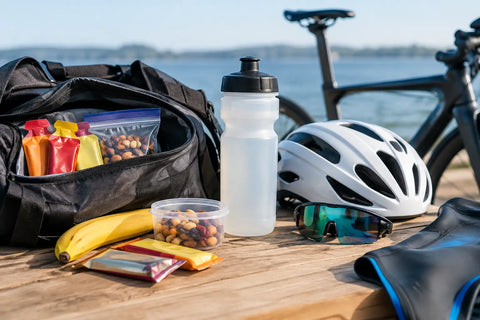
Treat your nutrition and hydration plan as seriously as you would for an outdoor event of similar duration and intensity. Electrolyte replenishment in a heated indoor space is crucial—not optional.
Pre-Ride Reconnaissance: The Secret Weapon
Here's a pro move most people skip: familiarize yourself with stage routes before event day. Jump into "Free Ride" mode and preview the courses using map resources like ZwiftInsider. Understanding where the climbs hit, where you can recover, and where the sprint segments are located gives you a massive tactical advantage.
Think of it like walking a race course the day before—except you can do it from your living room. This approach mirrors the preparation strategies used by elite triathletes who use AI training apps to optimize their race-day performance.
Special Days: Peak Zwift Day
Mark your calendar for January 20—Peak Zwift Day. This is when professional cyclists, creators, and community figures lead special group rides. It's part motivational boost, part networking opportunity, and entirely worth showing up for.
Registration & Results: The Practical Stuff
How to Register:Sign up through the Zwift Companion app or visit zwift.com/events/tag/tourdezwift2026. Registration stays open for each stage until start time, giving you maximum flexibility.
Tracking Your Progress:- Immediate results appear in the Zwift Companion app
- Digital rewards (unique kit pieces and badges) unlock as you complete stages
- For detailed performance analysis, link your account to ZwiftPower.com—highly recommended for anyone taking this seriously
- Cost: Included with your active Zwift subscription (specific 2026 pricing to be confirmed)
- Cut-off Times: You must finish within the session window (typically 60-120 minutes) to receive stage completion credit
- Qualification Requirements: Just an active subscription—no athletic prerequisites necessary
Preparing for Success: The 6-8 Week Build-Up
If you're starting from scratch or coming back from an off-season, give yourself 6-8 weeks of base endurance and threshold power work before the event kicks off. The multi-week format means you'll need to manage cumulative fatigue—going in cold is a recipe for burnout by Stage 3.
For those new to structured training, consider following an 8-week training plan that builds progressive endurance. Train specifically for:
- Variable pacing demands
- Sustained climbing efforts (if tackling longer routes)
- Performance in thermally stressful environments (yes, this is a specific skill)
Essential Gear for Virtual Training Success
While Zwift provides the virtual environment, your physical setup determines your comfort and performance. Beyond the basic smart trainer, consider investing in quality support equipment:
- Heart Rate Monitor: Track your training zones accurately with a reliable heart rate monitor
- Hydration System: Keep electrolyte supplements within easy reach during long sessions
- <
#VirtualTraining #WinterFitnessChallenge
What is the Tour de Zwift 2026?
The Tour de Zwift 2026 is a six-week virtual cycling and running event organized by Zwift Inc., taking place entirely online from January 5 to February 22, 2026. It features a series of stages across various digital worlds designed to improve fitness and create a community-focused training experience.
How is the Tour de Zwift structured?
The event is divided into six one-week stages plus a bonus make-up week. Each stage is set in different virtual locations, providing a variety of terrain challenges. There are distance options for cyclists and runners, allowing participants to choose routes based on their fitness level and goals.
What equipment do I need to participate in the Tour de Zwift?
Participants need a Zwift-compatible smart trainer or treadmill, a device running the Zwift app, ANT+/Bluetooth connectivity, and an active Zwift subscription. Additional recommendations include a heart rate monitor, cadence sensor, multiple large water bottles, and powerful cooling fans.
What is 'The Ultimate Challenge' in the Tour de Zwift?
'The Ultimate Challenge' involves completing all 18 routes across the six stages, totaling 557.9 km. Participants who achieve this unlock entry to win a limited-edition Zwift Ride smart frame, receive a 12,500 XP bonus, and earn the coveted backwards After Party cap.
How do I register for the Tour de Zwift 2026?
Registration can be done through the Zwift Companion app or by visiting zwift.com/events/tag/tourdezwift2026. Sign-ups remain open for each stage until its start time, providing flexibility in participation.
What are some race strategies for the Tour de Zwift?
Key strategies include mastering the draft in cycling events, using strategic power-ups, pacing on long climbs, and treating nutrition and hydration plans as seriously as outdoor events. These tactics help conserve energy and optimize performance across stages.
Discover unique triathlon-themed merchandise, including stylish t-shirts, stickers, phone cases, and home decor - perfect for endurance sports enthusiasts and athletes. Shop now
Find the perfect running gear at TriLaunchpad — your triathlon journey starts here. Shop all collections →