From Cruise Control to Heart-Stopping Drama: The Tale of Two Victories at Laguna Phuket
How Georgia Taylor-Brown's solo masterclass and Tayler Reid's tactical thriller defined the 31st Laguna Phuket Triathlon.
While most athletes were winding down their seasons, two contrasting masterpieces unfolded at the 31st Laguna Phuket Triathlon — one a display of absolute dominance, the other a tactical thriller decided by mere seconds.
In the span of a single morning, spectators witnessed both Georgia Taylor-Brown's commanding solo performance and Tayler Reid's nail-biting victory over Josh Ferris — two completely different approaches to triathlon excellence.
This prestigious event, which has crowned champions like Jan Frodeno, Paula Newby-Fraser, Craig Alexander, and Michellie Jones, once again proved that its unique hybrid distance format (1.8km swim / 55km bike / 12km run) creates opportunities for racing drama unlike anywhere else on the professional calendar.
The Tale of Two Races: Contrasting Styles of Victory
Georgia Taylor-Brown's Solo Masterclass
For a so-called "gap year," it's been an incredibly busy few months for Taylor-Brown, and she approached this race sandwiched between Dubai T100, IRONMAN 70.3 Bahrain, and the T100 Grand Final in Qatar as something akin to a solo training session.
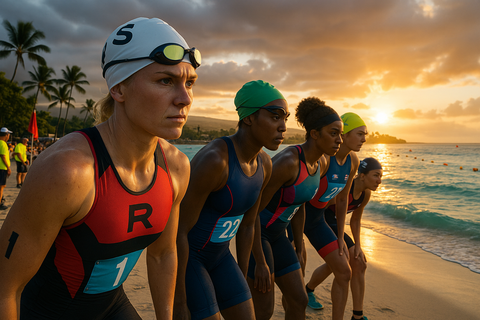
The only time the British star had female company was during the swim alongside New Zealand's Nicole van der Kaay. From the moment she mounted her bike, Taylor-Brown was on her own, methodically building what would become an almost eight-minute victory margin — a commanding performance that demonstrated the difference between world-class athletes and the rest of the field.
"I've wanted the rain to stop all week but today I wanted a bit of rain on the run as it started to get very humid and hot," Taylor-Brown reflected after her victory. "But it was so much fun, I loved it. I love racing among the age groupers – them cheering me on and me cheering them on. It's what I love about the sport."
Her comment reveals something crucial about the Laguna Phuket experience — the unique interaction between elite and age-group athletes that sets this race apart from traditional professional events.
Reid vs. Ferris: A Tactical Battle for the Ages
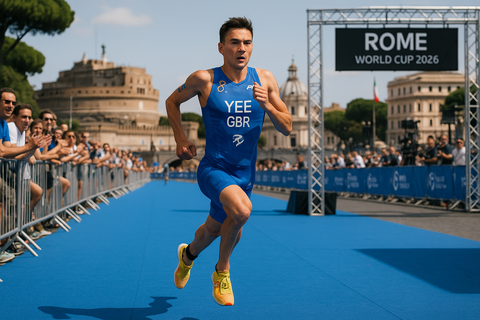
In stark contrast to the women's race, the men's event delivered edge-of-your-seat drama from start to finish. Tayler Reid and Josh Ferris were rarely separated throughout the entire duration, working together through the swim and bike before their tactical battle came down to the final kilometers of the run.
"I'm very happy, that was super hard. Me and Josh worked well together all day and then battled it out on the run," Reid explained afterward.
The collaborative approach through the early disciplines is a hallmark of smart non-drafting racing — conserve energy by sharing the load, then unleash your weapons when it counts.
Reid led through the first 10km of the bike course, the most technical section where local knowledge and bike handling skills become crucial. The pair then took turns setting pace before transitioning to what would become a 14-second thriller on the run.
"I enjoyed it a lot – I ran a lot quicker than last year and I love being here in Phuket," Reid added, highlighting both his improvement and the appeal of this destination race.
The Unique Challenge of Laguna Phuket's Hybrid Format
The 1.8km swim / 55km bike / 12km run format sits perfectly between Olympic and half-distance triathlon, creating a unique tactical puzzle that requires different skills than standard racing distances.
Non-Drafting Implications
Unlike draft-legal Olympic racing or the pure endurance test of IRONMAN, this hybrid distance in non-drafting format demands a specific skill set. Athletes must be strong enough to ride solo for 55km while maintaining enough running legs for a decisive 12km finale.
The technical nature of the bike course adds another layer of complexity. Reid's early leadership through the opening 10km technical section demonstrates how course knowledge and bike handling can provide tactical advantages — skills that don't always translate directly from other racing formats. For athletes looking to improve their cycling performance, investing in proper equipment like a GPS cycling computer can help track progress and optimize training.
Climate and Conditions
Thailand's tropical conditions add another challenge entirely. Taylor-Brown's comment about wanting rain during the run highlights how humidity and heat affect race strategy, even for athletes at the highest level. Proper electrolyte supplementation becomes crucial in these conditions. The combination of technical terrain and challenging weather creates opportunities for significant time gaps — as evidenced by Taylor-Brown's eight-minute victory margin.
What Makes This the "Race of Legends"
The prestige of Laguna Phuket extends far beyond its scenic location. The roll call of past winners reads like a triathlon hall of fame: Jan Frodeno, Paula Newby-Fraser, Craig Alexander, Michellie Jones, and 2024 champion Hayden Wilde.
Strategic Timing in the Season
Elite athletes choose this race for specific reasons beyond its prestige. The timing — during the traditional off-season — allows athletes to maintain competitive sharpness while recovering from major championship efforts. For someone like Taylor-Brown, racing between T100 events, it serves as an ideal training race with competitive intensity.
Age Group Integration
The unique aspect of elite athletes racing alongside age groupers creates an atmosphere unlike any other professional event. Taylor-Brown's enthusiasm for this interaction — "I love racing among the age groupers – them cheering me on and me cheering them on" — speaks to something fundamental about triathlon's inclusive culture that often gets lost in purely professional events.
This integration also provides age group athletes with unprecedented access to world-class racing, offering learning opportunities and inspiration that pure age group events simply cannot match. For those inspired to take on their own triathlon journey, check out our 8-week sprint triathlon training plan.
Performance Analysis: Breaking Down the Victories
Taylor-Brown's Dominance Deconstructed
Taylor-Brown's victory demonstrated textbook execution of hybrid distance racing. Her swim with van der Kaay established position without overextending, her solo bike effort was sustainable yet aggressive enough to drop the field, and her run execution in challenging conditions sealed a comprehensive victory. Quality swim goggles and proper triathlon suits can make a significant difference in race performance.
The performance fits perfectly into her broader 2025 campaign, showcasing the versatility that has made her one of the sport's most successful athletes across multiple formats and distances.
Reid's Tactical Masterpiece
Reid's approach exemplified smart non-drafting strategy. Working collaboratively with Ferris through swim and bike conserved energy for the decisive run battle, while his technical skills on the opening bike section established early position.
The 14-second victory margin tells the story of two perfectly matched athletes pushing each other to their limits — exactly the kind of racing that makes hybrid distance events so compelling for both participants and spectators. Modern training tools like a Garmin Forerunner GPS watch help athletes track their performance metrics and improve race execution.
The Broader Implications for Elite Triathlon
Non-Drafting Skills in a Drafting-Dominated Sport
As Olympic triathlon becomes increasingly tactical and draft-legal, events like Laguna Phuket serve as important reminders of pure racing ability. The skills required for solo efforts over challenging terrain remain fundamental to triathlon excellence.
Destination Racing Trends
The appeal of combining high-level competition with exotic locations creates value for athletes, sponsors, and fans alike. These events provide content and experiences that pure training cannot match. Athletes can explore triathlons near them to discover similar destination racing opportunities.
Hybrid Distance Racing as Development Tool
The unique demands of the 1.8/55/12 format create opportunities for athletes to test different tactical approaches and develop skills that translate across the triathlon spectrum.
Key Takeaways for Age Group Athletes
- Energy management matters: Reid and Ferris's collaborative approach shows the value of working together when rules permit.
- Technical skills pay dividends: Reid's early bike leadership demonstrates how handling skills create opportunities.
- Race your own race: Taylor-Brown's solo approach proves that sometimes the best tactic is simply superior execution.
- Conditions affect everyone: Even world-class athletes must adapt their strategies to heat, humidity, and terrain — proper hydration and electrolytes are essential.
Looking Ahead: The Future of Destination Racing
Events like Laguna Phuket represent an important evolution in professional triathlon. They combine the competitive intensity athletes need with the experiences that create lasting memories and connections to the sport.
As the triathlon calendar becomes increasingly congested with major series and championship events, destination races offer a different value proposition — one that combines performance with place, competition with culture.
The contrast between Taylor-Brown's dominance and Reid's thriller perfectly captured why this format continues to attract world-class fields. Whether through solo brilliance or tactical battles, the "Race of Legends" once again lived up to its name.
For athletes at every level, the lessons are clear: different racing styles can both lead to victory, tactical intelligence matters as much as physical ability, and sometimes the most memorable races happen in the most unexpected places. Whether you're training for your first sprint or chasing a beginner-friendly Ironman, the principles of smart racing remain the same.
Find the perfect race day essentials at TriLaunchpad — your triathlon journey starts here. Shop all collections →