She Thought She Was 'Too Old' at 55 – Then Won Gold at the World Championships
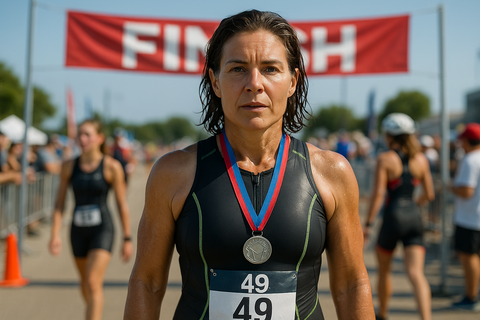
At 55, Anne Dockery had never run a race in her life. She was an ex-smoker battling bronchiectasis, a "incurable" lung condition that left her struggling with repeated bouts of bronchitis. Twenty-two years later, she's a world champion triathlete who holds British records and has completely reversed her lung condition – proving that it's never too late to transform your health and discover athletic potential you never knew existed.
With society often writing off fitness possibilities after 50, Anne's extraordinary journey challenges every assumption we hold about aging and athletic achievement. Her story isn't just inspiring – it's a roadmap for anyone who believes their best physical years are behind them.
The Unlikely Beginning: From Smoker to Runner
Anne's relationship with sports had always been complicated. At school, she was the eternal enthusiast – "I cut up oranges, I cheered, I went to all the training sessions, but I was never picked for a team." This early experience of being sidelined could have discouraged her from pursuing athletics, but it planted seeds of determination that would bloom decades later.
In her mid-20s, Anne discovered squash and fell in love with the sport despite being, by her own admission, "terrible." She spent years in the bottom leagues, but her persistence paid off. "I was stuck in the bottom leagues for years, but I kept playing and practising until my skills improved," she recalls. This pattern of gradual improvement through consistent effort would become the foundation of her later athletic success.
However, by her late 40s, Anne's health was declining. Years of smoking had taken their toll, and she was diagnosed with bronchiectasis – a condition where the airways become damaged and scarred, typically considered incurable. The repeated infections and breathing difficulties were affecting her quality of life, and conventional wisdom suggested her active days were over.
The moment that changed everything came from an unexpected source: her second husband Mike's simple suggestion that she try running. Despite thinking it was "the most boring thing in the world," Anne decided to give it a chance. She started slowly, exploring the beautiful countryside around Poughkeepsie, New York, without any pressure about times or distances.
Then came the pivotal moment. Mike arbitrarily entered her in her first race – a hilly 5K cross-country course. Anne was so nervous she "refused to warm up in case I didn't have the energy to finish!" But finish she did, clocking 28:40 and earning third place in her age group. That bronze medal at age 55 ignited a passion that would transform her life completely.
The Progressive Journey: Building Athletic Identity
That first 5K opened a door Anne hadn't known existed. She joined a marathon training group focused on fundraising for leukemia and myeloma research, initially just for the social connection. "We ran for miles but it never entered my head that I might be able to run a marathon! I just went for the company," she explains.
This highlights a crucial element of successful fitness transformation later in life: community support often matters more than individual motivation. Anne's gradual improvement came not from solitary training but from being surrounded by like-minded people who normalized the idea of running long distances.
When Anne moved to Florida and joined Space Coast Runners, her athletic identity truly crystallized. She began winning races and eventually earned "Runner of the Year" – achievements that seemed impossible just a few years earlier. Her key insight: "It takes time to get to your best in running. It's not a speedy thing. But you actually can improve whatever your age."
At 63, Anne faced another pivotal challenge: her first triathlon. The swimming component terrified her – she could only manage breaststroke and "very badly" at that. But encouragement from Willie, a friend in her early 70s who became her coach, helped Anne overcome her fears. "We tend to sabotage our development because we are scared and think we can't do things instead of saying: well, I'll give it a try," Anne reflects.
Remarkably, she won her age group in that first triathlon, proving that starting new athletic disciplines in your 60s isn't just possible – it can lead to immediate success when approached with proper preparation and mindset. For those looking to begin their own triathlon journey, this comprehensive 8-week sprint triathlon training plan offers a structured approach to conquering all three disciplines.
Anne's Weekly Training Plan at 77
What does it take to compete at the world championship level in your late 70s? Anne's current training schedule might surprise you with its balance of variety, rest, and professional guidance:
- Monday: Light bike ride + gym session (often with her grandson)
- Tuesday: Strength training with personal trainer Andy Wadsworth + evening pool session with local triathlon group
- Wednesday: Scheduled run with running coach Keith Brackstone
- Thursday: Bike ride
- Friday: Swim session
- Saturday: Run
- Sunday: Bike ride
This schedule reveals several key principles for senior athletic success:
Professional Coaching is Essential: Anne works with specialized coaches for different disciplines. This isn't luxury – it's injury prevention and performance optimization. Proper technique becomes more critical with age, and professional guidance helps navigate the complexities of training an aging body safely. If you're considering working with a coach, learn the 7 signs you've found an elite triathlon coach.
Variety Prevents Overuse: By rotating between running, cycling, and swimming, Anne avoids the repetitive stress that often causes injury in single-sport athletes. Each activity complements the others while giving different muscle groups time to recover. Understanding 7 game-changing triathlon drills can help maximize the effectiveness of each training session.
Recovery is Built-In: Notice that no two consecutive days feature the same high-intensity activity. Anne also emphasizes the importance of good rest and regular check-ins with a chiropractor every six weeks.
Practical Safety Measures: Anne has learned to "not do stupid things" – like avoiding night runs due to unsafe pavements. This practical approach to risk management allows her to train consistently without injury setbacks.
The Mental Game: Mindset Shifts That Enable Success
Perhaps the most crucial element of Anne's transformation isn't physical – it's psychological. "I have found that as I have aged I have become braver," she explains, highlighting a counterintuitive truth about aging and risk-taking.
This increased bravery stems from perspective gained through life experience. As Anne puts it, "As older people we have all lived through ups and downs. Many of us are much stronger than we think." Having survived marriages, career changes, health scares, and other life challenges, the fear of failing at a sporting event seems less daunting.
The mental strength developed through sport creates a positive feedback loop that extends far beyond athletics. "Running is not always about the physical. It takes mental strength too, and that mental strength seeps in to the rest of your life," Anne notes. Each race completed, each personal goal achieved, builds confidence that applies to every area of life.
Anne's approach to goal-setting in later life is particularly instructive. Rather than focusing solely on winning (though she's certainly done plenty of that), she emphasizes "the satisfaction of just doing well and succeeding at something that is important to me." This internal motivation proves more sustainable than external validation and helps maintain consistency through inevitable performance fluctuations.
Health Transformation: The Medical Benefits
The most remarkable aspect of Anne's story may be the reversal of her "incurable" bronchiectasis. At her last medical check, doctors found "no evidence" of the condition. This dramatic improvement demonstrates exercise's powerful healing potential, even for serious respiratory conditions.
Beyond her lung health, Anne's training has provided comprehensive health benefits:
- Bone Health: Running and strength training have helped manage osteoporosis, a common concern for post-menopausal women. Weight-bearing exercises stimulate bone formation and help maintain bone density.
- Functional Fitness: Anne can run with her grandchildren and has the energy for active play – quality of life improvements that matter more than medals.
- Injury Prevention: Through proper coaching and body awareness, Anne has learned to train intensively while avoiding the injuries that sideline many senior athletes. For those over 50 looking to achieve similar results, these 10 proven tips for achieving PRs after 50 offer valuable guidance.
- Energy and Vitality: Rather than the decline typically associated with aging, Anne's consistent training has maintained high energy levels well into her 70s.
Taking Action: Your First Steps
Anne's journey offers a practical roadmap for anyone considering a fitness transformation after 50:
-
Start with Medical Clearance
Before beginning any new exercise program, especially with existing health conditions, consult your healthcare provider. Anne's bronchiectasis actually improved with exercise, but this should happen under medical supervision.
-
Find Your Community
Join local groups like parkrun, walking clubs, or beginner fitness classes. Anne consistently emphasizes the importance of supportive communities in maintaining motivation and learning proper techniques.
-
Begin with One Activity
Anne started with just running before adding cycling and swimming. Master one discipline before expanding to avoid overwhelming yourself or risking injury from too many new movement patterns.
-
Invest in Professional Guidance
Anne's success accelerated dramatically once she began working with qualified coaches. Professional instruction helps optimize technique, prevent injury, and progress safely. Consider exploring AI training apps that have been tested by age groupers as an accessible starting point.
-
Focus on Consistency Over Intensity
Anne's gradual progression over two decades proves that sustainable improvement comes from regular, moderate effort rather than sporadic intense training.
-
Embrace the Learning Mindset
Approach new challenges with curiosity rather than fear. Anne learned to swim properly in her 60s and started track events in her 70s. Every decade can bring new skills and achievements.
Essential Gear for Your Journey
As you embark on your own transformation, having the right equipment can make a significant difference. For swimming, invest in quality adjustable UV400 swim goggles that provide clear vision and comfort during training sessions. To track your progress and monitor your heart rate like Anne does with her coaches, a waterproof heart rate monitor is essential for ensuring you're training in the right zones.
For recovery and maintaining the electrolyte balance crucial for endurance training, consider magnesium and potassium electrolyte supplements to support your body's adaptation to increased training loads.
The Path Forward: Why Age is Just Data
Anne's current goals perfectly encapsulate her approach to aging: "I am 80 in 2028 and intend to compete in the Duathlon of course…oh, and World Athletics. Bring it on!" This forward-looking mindset, combined with concrete plans, demonstrates how athletic goals can provide purpose and motivation well into the ninth decade of life. Her story echoes other inspiring journeys like the 88-year-old triathlete who continues to smash age barriers.
Her story reframes aging from decline to opportunity. Each year brings new age-group categories to compete in, new personal challenges to tackle, and new communities to join. Rather than accepting limitations, Anne continuously expands what seems possible.
The broader implications extend beyond individual achievement. Anne's success challenges societal assumptions about aging and capability. When we see a 77-year-old world champion, it forces us to reconsider what we believe about our own potential as we age. For more inspiration, read about how endurance sports can reignite passion and purpose in mid-life.
For anyone who feels their best years are behind them, Anne's journey offers compelling evidence otherwise. Whether the goal is a first 5K, managing a health condition through exercise, or competing at the highest levels, the principles remain the same: start where you are, progress gradually, seek support, and never underestimate what's possible.
As Anne puts it: "Life begins at 70!" For those willing to take that first step, regardless of age, extraordinary transformations await.
Ready to start your own fitness transformation? Consider joining your local parkrun for a supportive introduction to running, or explore triathlons near you to discover events in your area. Remember, every champion was once a beginner – and it's never too late to begin.
Find the perfect training gear at TriLaunchpad — your triathlon journey starts here. Shop all collections →