
IRONMAN Western Australia 2025: Cameron Main's Triumphant Debut and Lotte Wilms' Dominant Victory
Race report, tactical analysis and takeaways from Busselton — Main's shock debut win and Wilms' gun-to-tape performance.
In a stunning display of athletic prowess and strategic brilliance, Scotland's Cameron Main achieved what many deemed impossible—winning an IRONMAN on his very first attempt. This remarkable feat marked his transition from a short-course specialist to a full-distance champion within just a year. Meanwhile, Lotte Wilms from the Netherlands showcased a masterclass in front-running strategy, claiming her second IRONMAN victory at the 2025 IRONMAN Western Australia Asia-Pacific Championship in Busselton.
This final professional IRONMAN of the season was a fitting conclusion to 2025, offering four coveted Kona qualifying spots per gender and highlighting two dramatically different approaches to IRONMAN success. Main's breakthrough performance and Wilms' wire-to-wire dominance provide valuable insights into race strategy, mental resilience, and the rapid progression possible in professional triathlon.
Cameron Main's Historic Debut: A Meteoric Rise
From Short-Course to Full-Distance Champion
Cameron Main's victory is a testament to one of the most rapid progressions in modern triathlon. The Scottish athlete made his professional middle-distance debut at IRONMAN 70.3 Western Australia in December 2024, exactly a year before claiming his first full-distance victory on the same Busselton course.
"I am very sore, very tired, but I'm overwhelmed with emotion," Main expressed after crossing the finish line in 7:38:26. "To win my first IRONMAN on debut is just honestly crazy. The whole day was very, very hard from start to finish."
His race splits—46:15 swim / 4:03:29 bike / 2:43:57 run—tell the story of a perfectly executed strategy. Yet, these numbers don't capture the tactical intelligence and crisis management that defined his breakthrough performance.
Tactical Excellence and Power Management
Main's approach to his debut race demonstrated remarkable maturity for an IRONMAN newcomer. Partnering with training mate Ollie Turner, he aimed for an aggressive swim to establish an early position—a strategy that nearly backfired when Australian powerhouse Nick Thompson closed a significant gap.
"Me and Ollie, my best mate, who's also a British athlete, we wanted to really push the swim on and make it quite hard, but we didn't actually get the gap we thought we'd have on Nick Thompson," Main explained. "He had a great swim and when I saw him running out of transition about a minute behind me, I thought this is going to be a hard day and he caught us very fast."
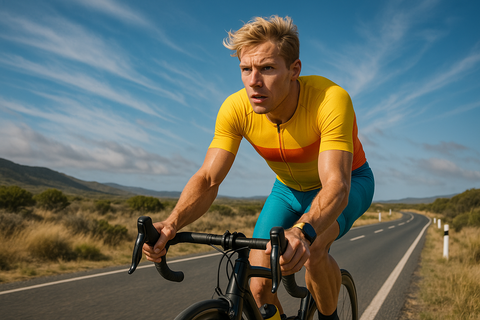
The bike leg became a lesson in power management and race awareness. Despite riding alongside seven other athletes within 30 seconds through 180km, Main made a crucial tactical decision that would define his race.
"I actually rode about 10 watts harder than I was planning on doing. I thought, you know what, I'm probably going to blow up at some point – I just about made it to the finish line."
This calculated risk-taking exemplifies the fine margins that separate IRONMAN winners from the field. Main's willingness to exceed his planned power output, while dangerous, demonstrated the race instinct that champions possess. For athletes looking to optimize their bike performance, understanding aerodynamic performance calculations can provide crucial insights.
Crisis Management Under Pressure
The defining moment of Main's race came at 40km into the marathon when cramping threatened to derail his debut victory. This is where mental preparation and previous racing experience proved invaluable, despite never having raced the full distance before.
"A bit of cramp at 40km but I was just trying to work as hard as I could the whole day and do myself proud," Main reflected. "I cramped at 40km, I thought I wasn't even going to make it to the finish line. To win, I honestly just can't believe it. I didn't even think I was going to win until about the last 500 metres because I was just cramping all over and I was so sore."
Main's ability to hold his composure and race lead while managing significant physical distress speaks to both his mental resilience and the depth of preparation that made his rapid progression possible. Proper electrolyte supplementation can be crucial in preventing such cramping issues during long-distance racing.
Racing at Home: The Perth Connection
Main's victory carried special significance as his father lives in Perth, making Western Australia a "home away from home." The emotional support and familiar environment clearly played a role in his breakthrough performance.
"I love Busselton, it's like a home away from home. The support was crazy, everyone was shouting my name the whole 42km in the marathon," Main said. "For both of us to be here racing together [with partner Sophia Green], it's just amazing. It's been a difficult year for Sophia as well and not an easy year for me with a couple of injuries so to be rounding out in a good, positive way here in Busselton is just amazing."
Lotte Wilms' Commanding Win: A Masterclass in Front Running
Perfect Execution from Start to Finish
While Main's victory captured headlines for its debut drama, Lotte Wilms' performance was equally impressive for its tactical perfection. The Netherlands athlete, who has called Australia's Sunshine Coast home for 12 years, led from the swim exit to the finish line in 8:30:50.
"It's always a dream [to win gun to tape] and I think that's how I actually can win an IRONMAN, just race from the front all day, that's just where I'm at my best," Wilms explained.
Her race splits (48:09 swim / 4:29:23 bike / 3:07:06 run) demonstrated the sustainable power that makes front-running possible at IRONMAN distance. Unlike many races where early leaders fade, Wilms had the engine and tactical awareness to maintain her advantage. Quality swim goggles are essential for establishing that early lead in the water.
Building the Winning Margin
Wilms' bike leg provided the foundation for victory, as she steadily extended her lead to a commanding 14 minutes. Her surprise at the gap size reveals how effortlessly the winning move developed.
"I had massive lead on the bike which surprised me to be honest. From 20km, I could see a six-minute lead and I couldn't believe I was pulling away for 14 minutes," she said. "It meant I really could just pull back on the second lap, but my legs were not really going anymore, so maybe I got carried away a little bit for the first lap. But 14 minutes, it was pretty good."
This honest assessment shows the balance between aggressive racing and sustainable pacing that defines successful IRONMAN strategy. Wilms' ability to moderate her effort when she realized the size of her advantage demonstrated the race management skills that separate good athletes from champions.
Overcoming Personal Adversity
Wilms' victory carried extra emotional weight given the challenges she faced earlier in 2025. Her journey to the top step included overcoming both illness and personal loss.
"I feel really proud of myself. The start of the year I had shingles, it was a really tough time also because a good friend of mine passed away as well," Wilms shared. "You just need time to grieve and then you just pick yourself up and go again. Lucky I have this sport, and I can just go out the door and do what I love."
Racing "Home" After 12 Years
For Wilms, racing in Australia represents more than just favorable conditions—it's genuinely racing at home. Her 12-year residency on the Sunshine Coast has created deep connections that clearly influenced her performance.
"I've been living in Australia now for 12 years, so for me it's just easier to race here and to have a full IRONMAN win is pretty cool," she noted. "I'm feeling really thankful. It's my second [IRONMAN] win and I always wanted to have a win in Australia, so I couldn't be more proud and happy."
The Competitive Landscape: Contrasting Race Dynamics
Men's Race: Tactical Battle of Attrition
The men's race exemplified classic IRONMAN racing, with eight athletes separated by just 30 seconds after 180km of cycling. This grouping included Main, Australian hope Caleb Noble (who finished 2nd in 7:42:43), Japan's Jumpei Furuya (3rd in 7:43:53), and local favorite Nick Thompson (4th in 7:44:23).
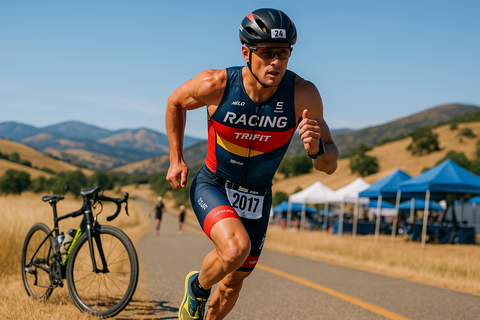
The tight racing created tactical intrigue throughout the bike leg, with Thompson initially taking the lead into T2. However, Main's superior run fitness ultimately decided the outcome, as he built a winning margin of over four minutes in the marathon. For athletes looking to improve their running performance, investing in quality racing shoes can make a significant difference.
Women's Race: Dominance and Disappointment
In contrast to the men's tactical battle, the women's race was defined by Wilms' early dominance and several compelling storylines behind her. Kate Curran's impressive IRONMAN debut earned her 2nd place (8:44:50), while France's Ann-Sophie Pierre claimed the final podium spot (8:46:48).
The race carried emotional weight with Els Visser's retirement finale—the Dutch athlete finished 5th (8:52:22) in her final professional race before returning to medicine. Meanwhile, heartbreak struck for 2023 winner Fenella Langridge, who withdrew after struggling with the effects of a bike crash earlier in the week.
Kona Implications and Future Goals
Instant Championship Qualification
As the designated Asia-Pacific Championship, IRONMAN Western Australia offered four Kona qualifying spots per gender. Main's debut victory secured him automatic qualification for the 2026 IRONMAN World Championship, providing a launching pad for his ambitious future plans.
"[To qualify for Kona] it's actually mad, that's crazy. My plan next year is to go full in for the IRONMAN Pro Series," Main announced. "I've not actually posted that publicly, so I suppose this is a release of that. I'm going to be really focused on the Pro Series—three IRONMANs, two IRONMAN 70.3s, and I want to be on the podium."
Historical Context and Future Potential
Main's debut victory joins a select group of athletes who have won their first IRONMAN attempt. While exact statistics are difficult to compile, such immediate success at the professional level remains exceptionally rare, making his achievement all the more significant.
His progression timeline—short course to 70.3 debut to IRONMAN winner in 12 months—challenges conventional wisdom about the time required to develop full-distance racing skills. This rapid development suggests either exceptional natural aptitude for the distance or revolutionary training methods that could influence how athletes approach IRONMAN preparation.
Course Analysis and Race Conditions
Busselton's Strategic Elements
The Busselton course played a crucial role in both victories, offering conditions that suited different racing styles. The relatively flat bike course enabled the tactical grouping that defined the men's race, while the consistent conditions allowed Wilms to execute her front-running strategy without environmental complications.
Main's familiarity with the venue, gained through his 70.3 debut 12 months earlier, provided valuable course knowledge that contributed to his tactical execution. Understanding the wind patterns, crowd support locations, and technical sections gave him advantages that pure fitness alone couldn't provide.
Perfect Racing Conditions
Weather conditions on race day appeared optimal, contributing to the high quality of performances across both fields. The absence of extreme heat, strong winds, or rough water allowed athletes to execute their race plans without significant environmental adaptation.
These conditions particularly benefited Main's debut approach, as he could focus entirely on pacing and tactical execution rather than managing external variables that often define IRONMAN racing. Athletes preparing for their own races should consider using GPS watches to track their training and race-day performance metrics.
Key Takeaways for Athletes and Coaches
Rapid Progression is Possible with Smart Strategy
Main's journey from short course to IRONMAN winner challenges traditional development timelines. His success suggests that with proper preparation, tactical awareness, and mental resilience, ambitious progression is achievable in shorter timeframes than previously believed.
- Building on existing aerobic base from short-course racing
- Gaining course familiarity through 70.3 experience
- Developing tactical awareness through middle-distance racing
- Maintaining confidence while respecting the distance
Front-Running Remains Viable Strategy
Wilms' wire-to-wire victory demonstrates that leading from the front can still succeed in modern IRONMAN racing. Her approach required:
- Superior swim skills to establish early position
- Sustainable bike power to extend advantage
- Mental strength to manage pressure of leading
- Tactical awareness to moderate effort when appropriate
Crisis Management Defines Champions
Both winners faced significant challenges during their races—Main's cramping and Wilms' early season difficulties. Their ability to maintain composure and execute solutions under pressure exemplifies the mental skills required for breakthrough performances. Proper nutrition and hydration, including magnesium supplementation, can help prevent cramping and support recovery.
Conclusion: Setting New Standards for Achievement
The 2025 IRONMAN Western Australia showcased two different paths to the same destination. Main's debut victory represents the pinnacle of rapid progression and tactical excellence, while Wilms' commanding win demonstrated the power of perfect execution and mental resilience.
For aspiring IRONMAN athletes, these performances offer valuable lessons in race strategy, mental preparation, and the possibility of ambitious goal-setting. Main's journey from short course to IRONMAN winner in 12 months shows that traditional development timelines can be compressed with proper preparation and tactical intelligence.
As both athletes look toward 2026—Main with his full commitment to the IRONMAN Pro Series and Kona qualification secured, Wilms building on her breakthrough Australian victory—their Busselton performances will be remembered as defining moments that reset expectations for what's possible in triathlon progression.
The 2025 season finale in Western Australia proved that in IRONMAN racing, the most compelling stories often come from athletes willing to challenge conventional wisdom and execute with precision when opportunity presents itself.
Find the perfect race day essentials at TriLaunchpad — your triathlon journey starts here. Shop all collections →